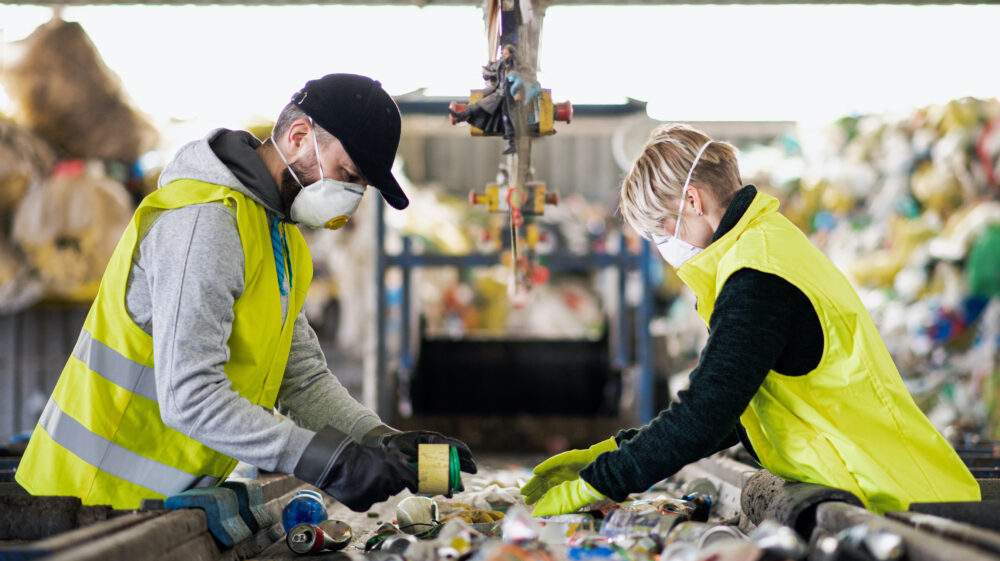
Photo: MD Duran / Unsplash
Technical "solutions" for human health or the environment introduced through development interventions, such as clean cookstoves, often fail to take hold because people never truly embrace them. SEI explores individual and household behaviour to better understand how and why people take up new technologies.
380 results / 23 of 43 pages
Journal article / The authors present 15 indicator-based frameworks to measure circularity at the city level to fill a gap in mapping and assessing circular economy transitions.
SEI brief / This discussion brief explains how chemical safety and noise pollution in Bosnia and Herzegovina are related to gender inequality, social inequity and poverty.
SEI brief / This discussion brief explains how waste management in Bosnia and Herzegovina is deeply intertwined with gender inequality and social inequity.
Perspective / This perspective highlights three major solutions to address the challenges faced by low-income and vulnerable transport users in African cities.
Other publication / In this briefing, leading scientists, including SEI Researcher Eleni Michalopoulou, highlight net-zero solutions and research priorities for the 2020s.
Journal article / This study finds significant impacts on water demand in the Caribbean arising from socio-economic factors.
Past event / The webinar will discuss the role of trade and the private sector in achieving a just transition to a climate-resilient future.
Feature / Analysis shows that a small handful of companies and banks are behind the production of most single-use plastics. SEI's Toby Gardner contributed to the report.
SEI working paper / This paper explores gender issues in East African public transport systems and gender mainstreaming as a way to build more sustainable and inclusive cities.