Editor’s choice
This project aims to help planners and policymakers alleviate energy insecurity across New York State.
2026–2028
Energy insecurity, or the inability to meet energy needs, affects one in three US households, with substantial disparities across racial, gender and economic dimensions. Climate change and rising energy prices are widening this gap.
Most existing research has focused on simple characterizations of energy insecurity, which limits its usefulness for policy decisions. This project aims to build a comprehensive decision-support toolkit to help planners and policymakers address energy insecurity across New York State. Using data exploration, spatial analysis and energy modelling, we aim to map energy needs, identify energy-insecure communities and model policy measures to reduce the energy equity gap.
The work unfolds in two stages, piloting first in the highly energy-insecure Genesee-Finger Lakes region, followed by other regions across New York. The pilot stage is designed in collaboration with the community-based organization, the Climate Solutions Accelerator of the Genesee-Finger Lakes Region. The project will engage community members, community service providers and government agencies throughout its duration, beginning with problem-identification focus groups in both urban and rural communities. Additional engagement will include a data validation workshop, a scenario development workshop and several community outreach events.
The first stage of the project is expected to run until the end of June 2027, with a second stage expected from July 2027 to April 2028.
Other publication / The Climate Solutions Accelerator of the Genesee-Finger Lakes Region and SEI US have been assessing the region's climate footprint and generating solutions.
1 February 2024 / About Business, Climate policy, Household energy, Mitigation, Pollution and Public policy
Other publication / The Climate Solutions Accelerator of the Genesee-Finger Lakes Region and SEI US have been assessing the region's climate footprint and generating solutions.
1 February 2023 / About Climate policy, Planning and modelling, Pollution and Public policy
Tool / The Low Emissions Analysis Platform (LEAP) is a powerful, versatile system for energy planning and climate change mitigation assessment.
About Climate policy, Energy access, Planning and modelling and Pollution
Project / This project uses a model developed from LEAP and NEMO to simulate greenhouse gas emission pathways across the state of Vermont.
2021 / About Climate policy, Planning and modelling and Public policy
Project / This project explores the link between social and economic inequality and the unsustainable carbon dioxide emissions that fuel human-caused climate change.
2020 / About Climate policy, Energy access, Geopolitics, Public policy, Sustainable lifestyles and Wellbeing
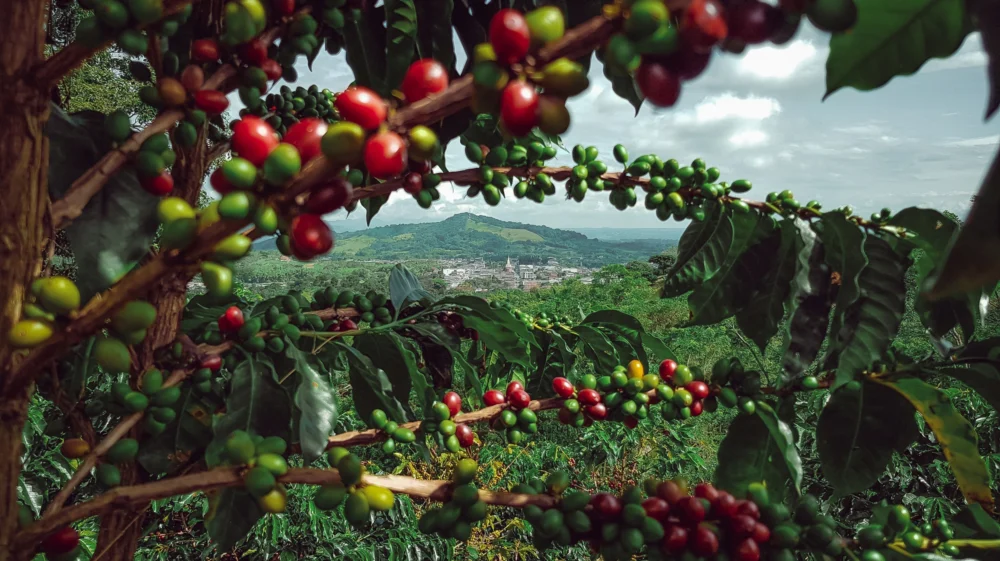
Feature / Trase identifies the leading coffee trading companies and estimate where traders and markets source coffee from within key coffee-producing countries.
2 September 2026 / About Forests, Geopolitics, Public policy and Supply chains
Feature / The Vermont Pathway, developed by SEI, provides the state with ways to develop scientifically-backed climate solutions in order to meet future climate goals.
19 February 2026 / About Climate policy, Fossil fuels, Mitigation, Planning and modelling and Renewables
Other publication / This chapter of the Handbook on Electricity Regulation explores how energy regulation can adapt to uncertainties on the path to net zero.
3 October 2025 / About Energy access