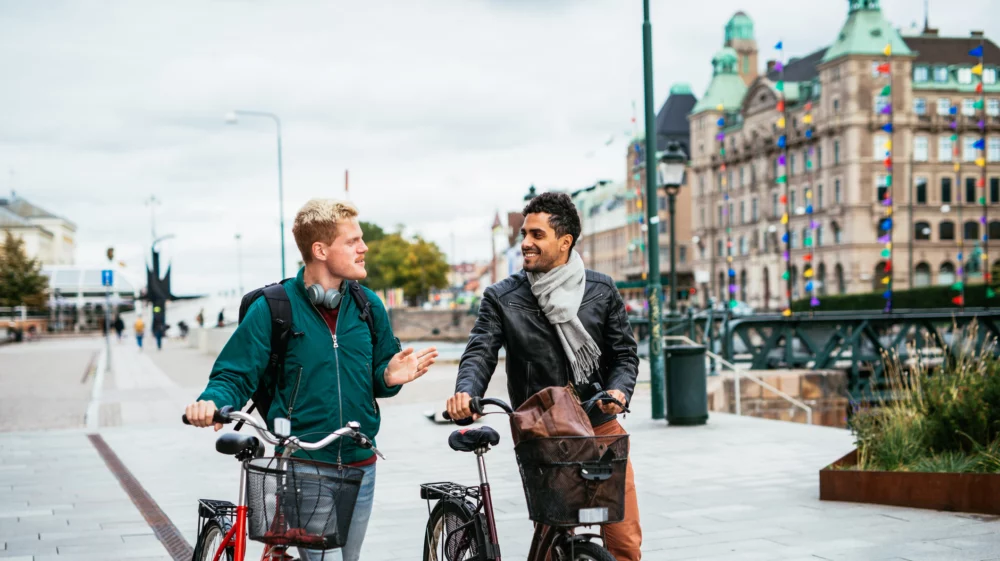
At SCORAI Europe 2025, SEI researchers shared powerful tools and real-world case studies, showing how fair, context-specific approaches rooted in everyday life and wellbeing can help make sustainable living the norm – and returned inspired to go further.
From 8–10 April, over 500 researchers and practitioners gathered in Lund, Sweden – and online – for the SCORAI Europe Conference 2025 to explore how more sustainable ways of living can move from the margins to the mainstream.
The event, hosted by the International Institute for Industrial Environmental Economics (IIIEE) at Lund University and organized as a joint initiative of SCORAI (Sustainable Consumption Research and Action Initiative), MISTRA Sustainable Consumption and the EU 1.5° Lifestyles project, underscored the urgency of reducing consumption-based emissions to meet climate goals.
SEI participated in the conference with a delegation from its Cities, communities and consumption (CCC) team, along with colleagues from other SEI teams. Together, they presented research focused on how Swedish municipalities can act as catalysts for sustainable consumption – emphasizing the importance of context-specific, fair and people-centred approaches.
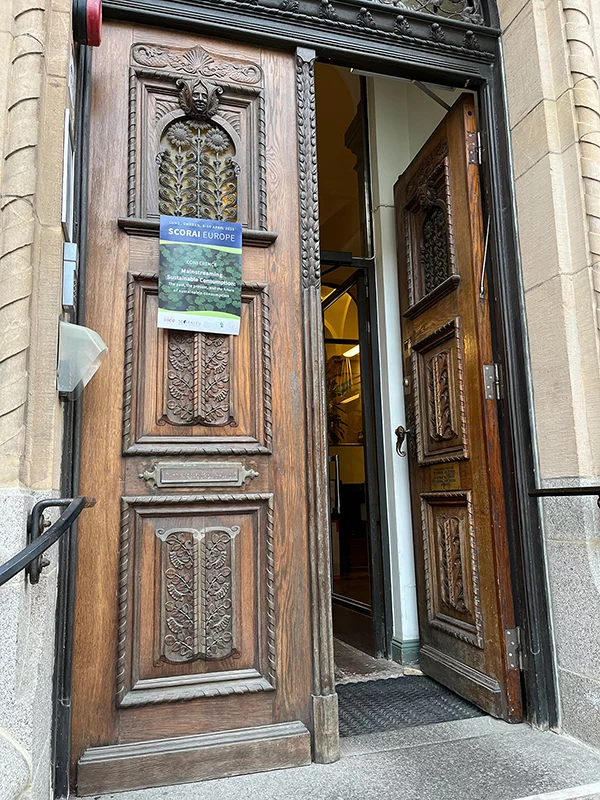
Welcoming participants to the SCORAI Europe 2025 Conference – a grand entrance for a grand exchange of ideas.
Photo: SEI
SEI’s CCC team showcased practical tools and case studies demonstrating how policies rooted in citizens’ everyday realities, needs and capacities can foster more inclusive and effective transitions toward sufficiency and social equity.
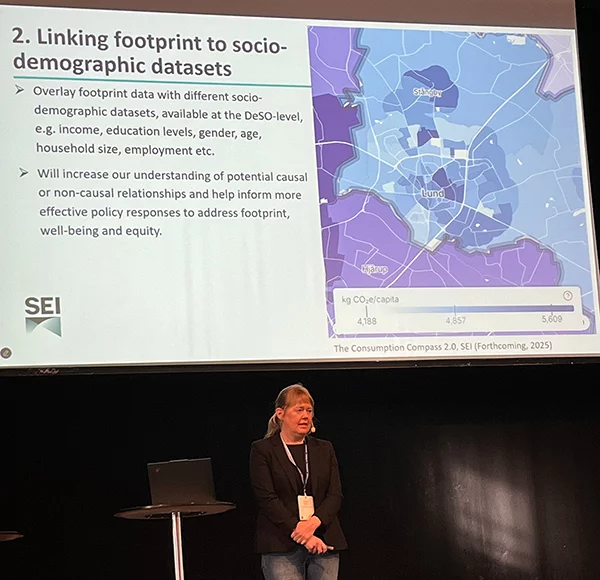
Katarina Axelsson presented on the importance of tailoring policy to household realities. She introduced the Consumption Compass, a digital tool developed by SEI to estimate Swedish household emissions at fine geographic scale. The data reveals significant variations within municipalities – larger cities tend to have higher average footprints – and shows how factors like income and household size affect consumption.
Overall, her findings indicate that a targeted approach that integrates fairness and wellbeing can facilitate a more effective transition to sustainable solutions in Sweden.
Peter Robert Walke offered a closer look at the modelling behind the Consumption Compass. Using a novel downscaling approach, the model assigns annual consumption-based emissions to around 6,000 statistical areas (DeSOs) in Sweden. This enables high-resolution, trend analysis based on real demographic and lifestyle data. Unlike traditional models that rely heavily on expenditure data and upscale from the household level, this approach allows for more targeted climate solutions by linking to socioeconomic conditions directly. Peter also discussed validation efforts and plans to expand the model to other countries.
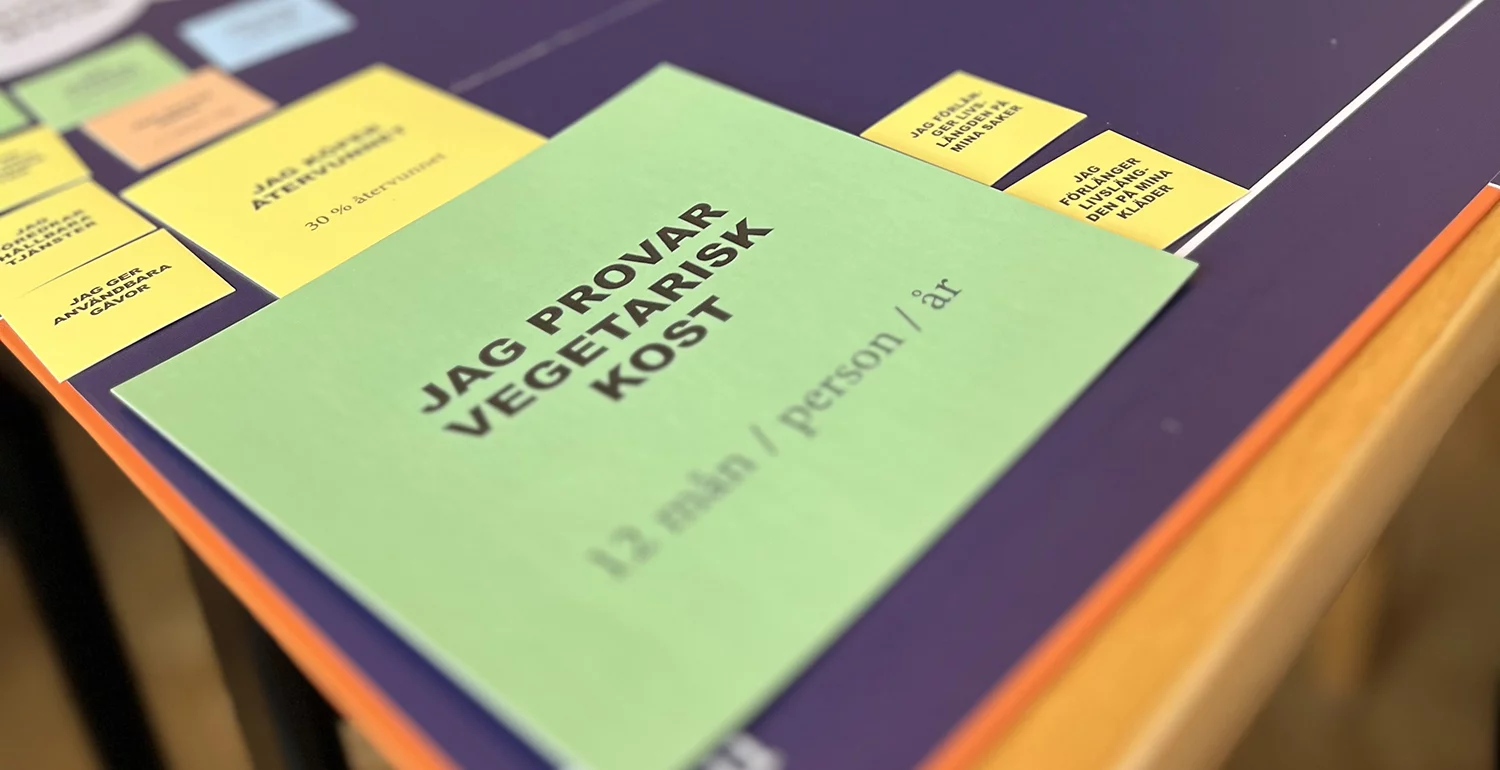
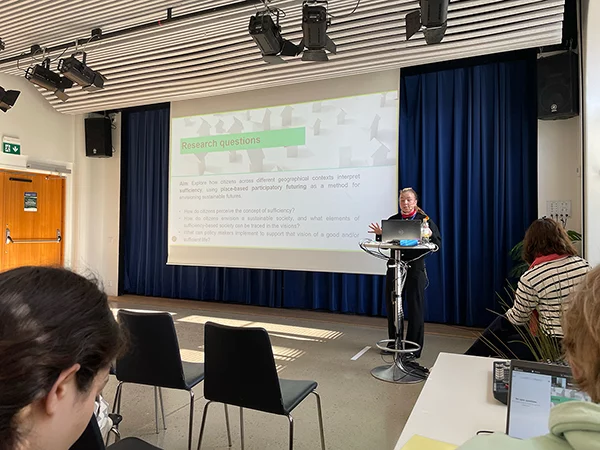
Julia Jokiaho presented work on urban sustainability transitions in Malmö, where she and Fedra Vanhuyse explore how municipalities can actively support sufficiency transitions at the local level. The project, which is a collaboration between the City of Malmö and SEI, combines participatory, place-based futuring with community engagement to co-develop alternative “urban imaginaries” – visions of what sustainable living might look like when shaped by local values and everyday realities.
Rather than prescribing top-down definitions – such as how much space or energy is “enough” – her work emphasizes the importance of creating inclusive spaces where people define sufficiency for themselves. “That’s where I believe its power lies,” she added, “in enabling local, grounded visions that can drive more just and sustainable futures.”
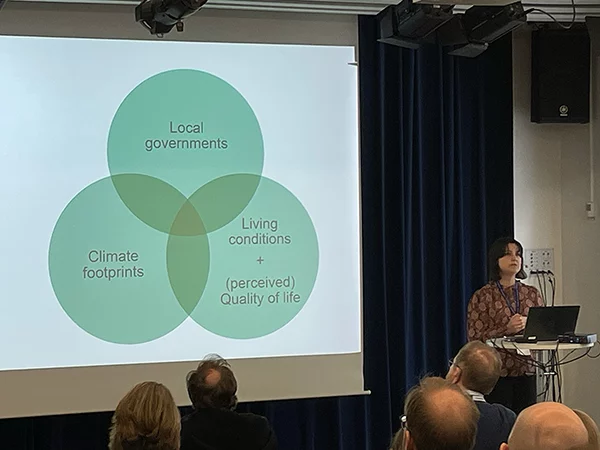
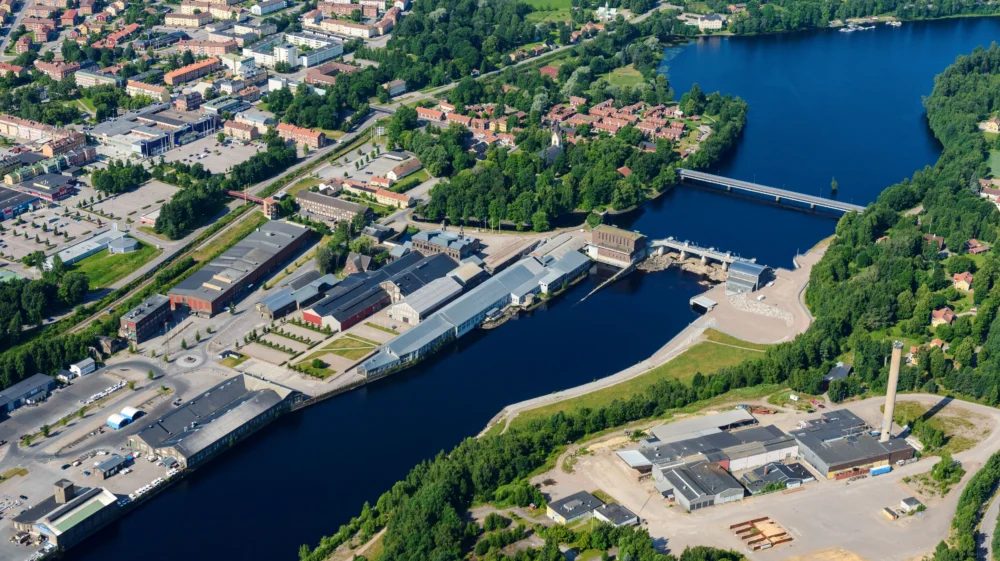
Karin André presented findings from a pilot study led by Avesta Municipality in collaboration with Research Institutes of Sweden (RISE) and SEI, examining how carbon footprints and wellbeing intersect at the neighbourhood level. The study focused on three different residential areas and combined multiple methods: focus group discussions with both adults and youth, a workshop with municipal stakeholders, and analysis using SEI’s Consumption Compass tool to assess local emission patterns.
Through these discussions, participants shared their everyday experiences, challenges and aspirations for improving quality of life in their communities. One key conclusion emerged: a location-based approach starting from context-specific needs, challenges and opportunities holds promise. “Understanding diverse conditions – across age groups, neighbourhoods and income levels – is essential for creating policies that are both inclusive and impactful,” said André.
The SEI team also engaged deeply with other sessions, reflecting on broader themes and new research directions. Julia Jokiaho was particularly drawn to discussions on post-growth and sufficiency, such as Åsa Svenfelt’s work on post-growth municipal planning and sessions highlighting growth-independent business models. She also praised the concept of “dystopian optimism,” presented by Carys Jane Egan-Wyer and Jon Bertilsson, as a compelling rethinking of how marketing can support transformative change.
However, she noticed a gap in attention to democratic innovations. “I was surprised by the lack of focus on deliberative forums, such as citizen assemblies or mini-publics,” she said. “They could play a key role in negotiating fair consumption corridors and setting shared limits in practice.”
For Katarina Axelsson, historian Frank Trentmann’s keynote stood out. Trentmann traced how consumption habits have shifted over centuries – often shaped by cultural norms as much as material needs, From umbrellas in 18th-century London to today’s centrally heated homes and climate-controlled pet environments, he showed how once-luxurious goods become everyday realities. His key message: today’s “normal” was once a future dream, and how we imagine the future shapes how we consume.
Meanwhile, Karin André highlighted Tim Jackson’s keynote on “the economy as care,” which framed economic activity around the principles of containing, maintaining and repairing our world. Jackson argued that prosperity should be redefined – not as wealth, but in terms of health and care for people and the planet. André saw this idea echoed in a creative workshop led by Kim Jennifer Huber and Anica Luggen-Hölscher from Wuppertal Institute. Participants used performative methods to embody and give voice to objects like plastic bags or landfills, building empathy and sparking fresh conversations about sustainability that can be put into action with citizens and actor groups.
All three SCORAI Europe 2025 keynotes – including Frank Trentmann’s historical perspective on consumption, Tim Jackson’s vision of an economy rooted in care, and other standout talks – are now available online. You can view them on the SCORAI Europe YouTube channel.
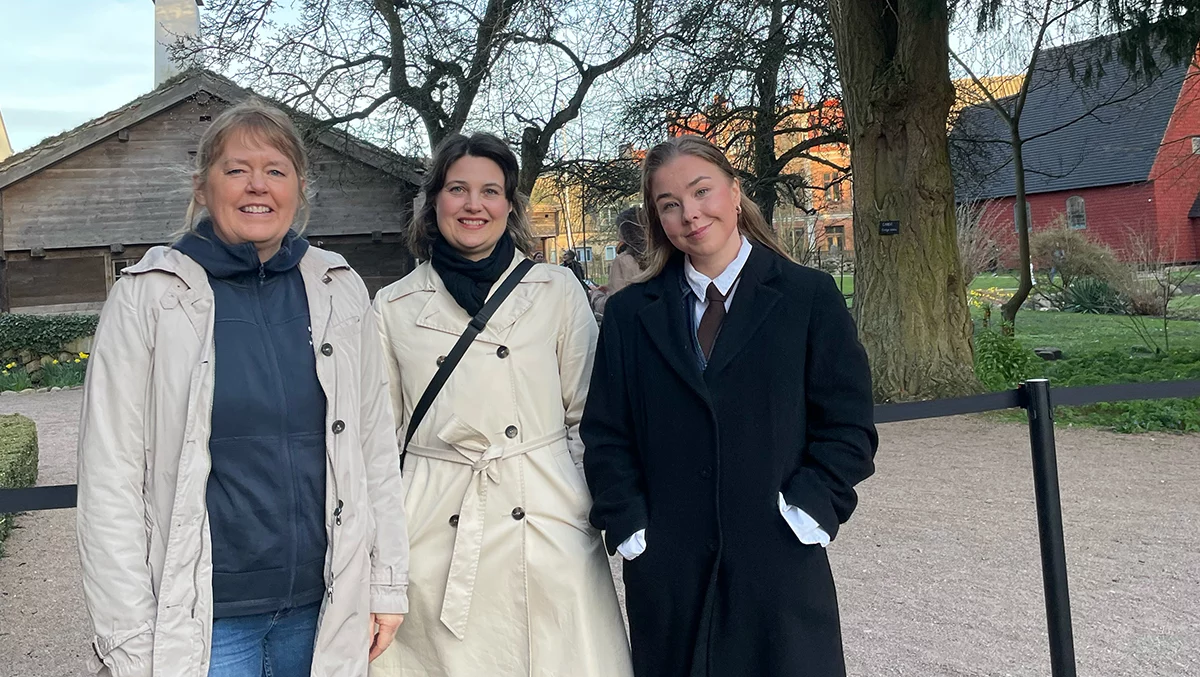
SEI’s Katarina Axelsson, Karin André and Julia Jokiaho outside the SCORAI Europe 2025 conference in Lund.
Photo: SEI.
After three days of lively exchange, the SEI team left the SCORAI Europe Conference with renewed energy and inspiration to continue their work on the projects mentioned earlier. They felt encouraged to see that they are part of a broad and engaged community, all working toward a sustainable transition. The themes and goals discussed at the conference closely matched those that the SEI team focuses on. Learning from others who face similar challenges and share similar ambitions was both motivating and affirming.
What became clear at SCORAI 2025 is that sustainable living is not just about reducing emissions. It is about enabling better lives through policies that respond to real people in real places. The tools and approaches showcased at the conference make it possible not only to imagine more sustainable futures, but to build them.
Project / How the municipality can help different residents to reduce their consumption-based climate footprint and at the same time create more equal living conditions?
Project / Together with the City of Malmö, SEI is exploring the transition to climate neutral lifestyles and how to finance the overall transition.
Project / Konsumtionskompassen är ett projekt samt ett innovativt verktyg som tydliggör utsläppen av växthusgaser från konsumtion i Sverige.
Project / The Sustainable Avesta project seeks to strengthen municipalities’ abilities to engage their communities to co-create actions to reduce climate impact.
Journal article / This research examines how the Folke Bernadotte Academy navigates competing demands for accountability and adaptive partner-oriented practices in peacebuilding.
Feature / What can a study on household waste in Bosnia and Herzegovina (BiH) teach us about driving change across the wider Western Balkans?