As climate pressures intensify in Kenya’s Ewaso Ng’iro catchment, an SEI Africa project is helping local and national actors rethink how they manage vital resources.
“Next time I’m thinking energy when talking about irrigation.”
This was the parting shot from Maurice Opondo, the Director of Irrigation Management at the State Department of Agriculture at a policy dialogue organized by Stockholm Environment Institute (SEI) and other partners in Nairobi.
To Maurice and other policymakers within the state department, irrigation systems help manage water scarcity and promote agricultural production. The flip side, as he discovered during the policy dialogue, is that energy, which powers irrigation systems, is also in high demand.
But water and energy are not the only resources that are interdependent. The water-energy-food (WEF) nexus explains how these three resources are interconnected. SEI and its partners used this approach in implementing a project funded by the International Climate Initiative (IKI), the “Applying the Water-Energy-Food Nexus to Promote Ecosystem-based Adaptation in the Ewaso Ng’iro North Catchment, Kenya”.
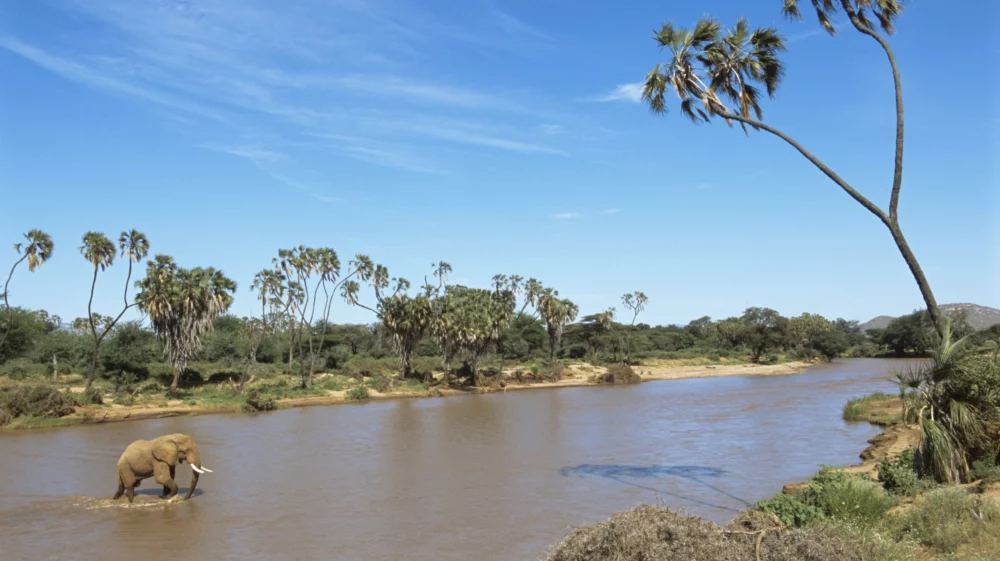
The project focused on the Ewaso Ngi’ro River catchment area, an expansive semi-arid area in northern and central Kenya that has been under constant threat of climate change. It was implemented across five counties: Laikipia, Samburu, Isiolo, Meru, and Nyeri.
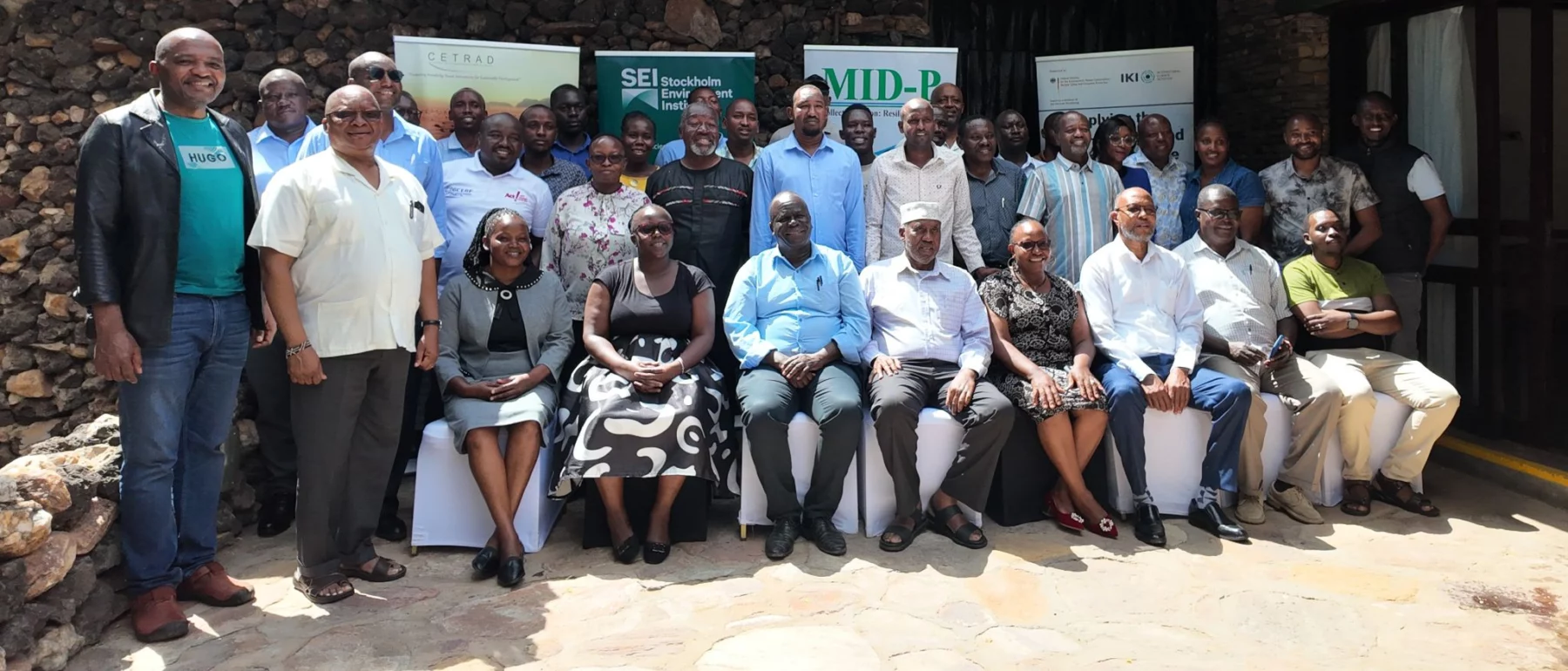
To share findings of the project and discuss their policy implications, SEI and its implementing partners engaged stakeholders in a high-level national policy dialogue in Nairobi on June 16, 2025, followed by a validation workshop in Isiolo County on June 26, 2025. The partners included Center for Training and Integrated Research in ASAL Development (CETRAD), Merti Integrated Development Programme (MID-P), Potsdam Institute for Climate Impact Research (PIK), and the National Drought Management Authority (NDMA).
At the centre of the discussions were presentations that demonstrated the urgent need to jointly manage water, energy, and food as part of a unified strategy to build resilience against the growing threats of climate change. Using SEI’s WEAP and LEAP tools, the researchers developed an outlook of the demand and supply of water and energy in the catchment up to 2030.
In the water sector, baseline data used in modelling the 2030 outlook showed that domestic use accounted for 43% of the water demand across the five counties, while commercial and subsistence irrigation made up 54%. WEAP results projected growing demand in these sectors that could cause serious water shortages in the catchment by 2030, leading to food insecurity, loss of livelihoods, and degradation of the ecosystem.
In energy, SEI scientists used LEAP to model three scenarios: business as usual scenario (BAU) using data from the Kenya National Bureau of Statistics (KNBS), county plan scenario using county integrated development plans (CIDPs) – developed every five years by county governments, and the climate-smart scenario which was based on two major climate policies at the national level. The national policies were the National Climate Change Action Plan (NCCAP) and the Nationally Determined Contribution (NDC), which targets a 32% reduction in greenhouse gas emissions by 2030.
In both BAU and county plan scenarios, LEAP results showed that the five counties would continue to emit more greenhouse gases from charcoal and wood – the dominant sources of fuel in the counties. However, if climate strategies outlined in the national policies were to be implemented, energy demand across the five counties would be reduced by an average of 50% by 2030. The reduction in energy demand in the climate smart scenario was attributed to increased use of liquefied petroleum gas (LPG) and the introduction of cleaner fuels such as bioethanol.
Similar trends were noted in the food and agriculture sector, where the number of livestock was rising steadily among the largely-pastoralist population, and water demand for meat and milk production was expected to increase by 2030.
Stakeholders noted that conflicting policies at the national and county government levels had caused fragmentation and overlap of mandates among public agencies. These fragmentations were likely to derail the country’s long-term development plans outlined in the Kenya vision 2030, as well as the achievement of United Nation’s sustainable development goals (SDGs) on hunger, water and energy.
With the anticipated disbursement of climate finance to county governments through the financing locally-led climate action (FLLoCA) programme, a government initiative designed to strengthen grassroots resilience to climate change, stakeholders agreed that the findings from the Ewaso Ng’iro Catchment area could help inform the allocation of FLLoCA resources by the National Treasury.
Peter Odhengo, Head of Climate Finance and Green Economy at the National Treasury, emphasized the importance of locally-led climate action. He urged the five county governments involved in the project to ensure climate adaptation programs are community-driven to enhance their impact and sustainability. He also encouraged continued engagement with the FLLoCA programme to enhance its model of decentralizing climate finance and devolving decisions to the local communities.
Former SEI Africa Centre Director, and Project Lead, Philip Osano, made a rallying call to county governments to consider the findings of the project in their strategic plans and climate adaptation efforts.
The success of this project hinges not just on the quality of its evidence, but on whether the recommendations will be implemented by county governments
Dr. Philip Osano
The call meant breaking from sectoral silos, aligning county and national strategies, and investing in locally-driven and scientifically-informed climate change solutions. The WEF Nexus not only offers a framework for action, but also a practical roadmap toward resilience, sustainability, and inclusive growth.
With the project coming to an end, SEI and its partners are expected to develop a policy brief that will support county governments in implementing recommendations, and communities in scaling EbA practices.
Project / The project supports Kenya to promote EbA practices and integrated planning for water, energy, agriculture and land use in Ewaso Ng’iro North Catchment area.
Tool / The Water Evaluation and Adaptation Planning tool (WEAP) provides a comprehensive and user-friendly framework for policy analysis in water resources planning.
Tool / The Low Emissions Analysis Platform (LEAP) is a powerful, versatile system for energy planning and climate change mitigation assessment.
Media coverage / In a Daily Nation Opinion, SEI Researcher Cassilde Muhoza explains why Kenya’s expansion of renewable energy has not automatically translated into lower tariffs
Perspective / Biochar looks simple, but its role is not.
Journal article / This study shows how climate adaptation planning for sanitation in Nairobi reinforces inequality by favouring sewer systems over equitable solutions.