Skip navigation
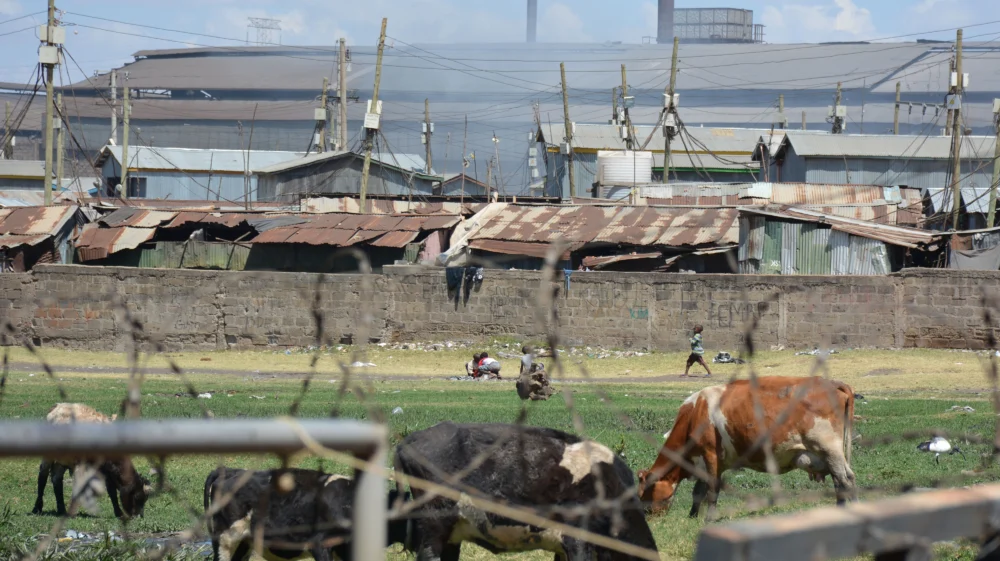
image of Piles of second-hand clothes at Gikomba market in Nairobi
Project

Investigating the environmental impacts of secondhand textiles in Kenya and Pakistan

This study seeks to provide an understanding of the ecological, social, and economic impacts of global used post-consumer textile product flows to identify high-priority areas for improving used textile circularity and sustainability to inform trade policies and investment decisions in scaling reuse and recycling systems in both exporting and importing countries.

Photo: Henry Dieto / SEI.

Active project

2026

The global trade in secondhand textiles to the Global South is rapidly expanding, bringing both economic opportunities and significant environmental challenges. In many importing countries, inadequate textile waste management systems result in harmful practices such as open burning and uncontrolled dumping.

These practices contribute to air pollution and greenhouse gas emissions, including methane and CO₂, while also driving water and soil contamination. Microplastic fibres from synthetic clothing enter waterways and soils, while toxic dyes and chemicals, along with landfill leachate, further degrade ecosystems and pose risks to human health.

Despite these growing impacts, there remains a critical gap in effective, evidence-based systems to manage textile waste sustainably.

In response, SEI is undertaking independent research to develop environmentally, socially, and economically sound approaches to secondhand textile management. This work will be informed by state-of-the-art evidence and an analysis of evolving global policies and business practices, with the aim of supporting more sustainable and resilient systems in importing countries.

Project goals and objectives

  • Systematically review, quantify, and compare the environmental impacts of exported textiles on freshwater and terrestrial ecosystems to inform decision-making for sustainable management practices and policies
  • Quantify and understand the complex flows of exported used textiles from the USA, UK, and EU to Kenya and Pakistan, in order to identify high-priority areas for improving textile circularity and sustainability to support trade policy and decision-making
  • Understand existing policies, identify gaps and challenges, and develop strategies to promote a more sustainable and circular used textile economy by identifying opportunities for innovation and fostering collaboration among chain actors, and
  • Understand the usability of secondhand clothing and national circularity capabilities
Anderson Kehbila

Senior Research Fellow/Research Director for Africa

SEI Africa

Cassilde Muhoza

Research Fellow

SEI Africa

Javan Odenyo

Research Associate

SEI Africa

Moses Kirimi

Research Associate

SEI Africa

Portrait photo of Charity Mutisya
Charity Waeni Mutisya

Communications Associate – Engagement

Communications

SEI Africa

Related centres
SEI Africa
Regions
Kenya, Pakistan