By exploring how the lived experience of energy poverty has changed since the 1950’s until today, this project aims to foreground the past to make future policymaking more critical of contemporary and unsustainable norms for energy use. This will shed new light on what it means to be energy poor in a world where total energy use continues to increase.
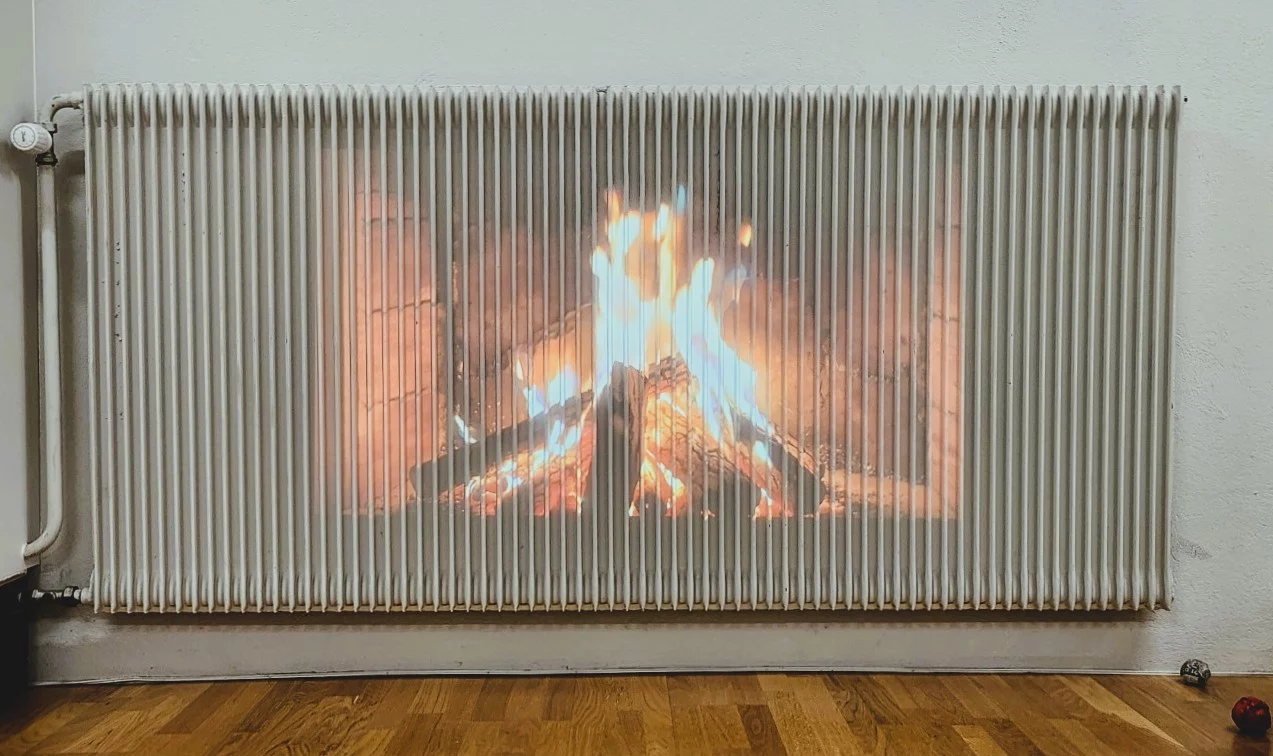
Projection of a fire onto a radiator, symbolizing the project’s exploration of the overlay between past and present.
Photo: Jenny von Platten / SEI.
Perspective / Cold homes and rising power bills are fuelling public anger and challenging trust in how Sweden’s energy transition is being managed.
Feature / SEI will serve as a national platform for energy poverty expertise, linking local and national efforts to the broader goals and resources of the EPAH.
Past event / För svenska kommuner och organisationer, ett webinar om att söka till EU-kommissionens Energy Poverty Advisory Hubs (EPAH) program för Technical Assistance.
SEI brief / An evaluation of the Swedish Social Climate Plan with the Transitional Assistance Framework, with examples from other member states’ proposed plans.
The project is funded by Formas under grant number 2025-00603. The project includes a research exchange at The Centre for Anthropocene History at KTH.
Perspective / As data centres expand across northern Sweden, Jenny von Platten asks who the country's energy is actually for.
Project / SAFEWIN studies how offshore wind power can be combined with environmental monitoring and the protection of critical infrastructure.
Project / Creating practical tools for decisionmakers in Lund to leverage sustainable consumption and socially just climate transitions.