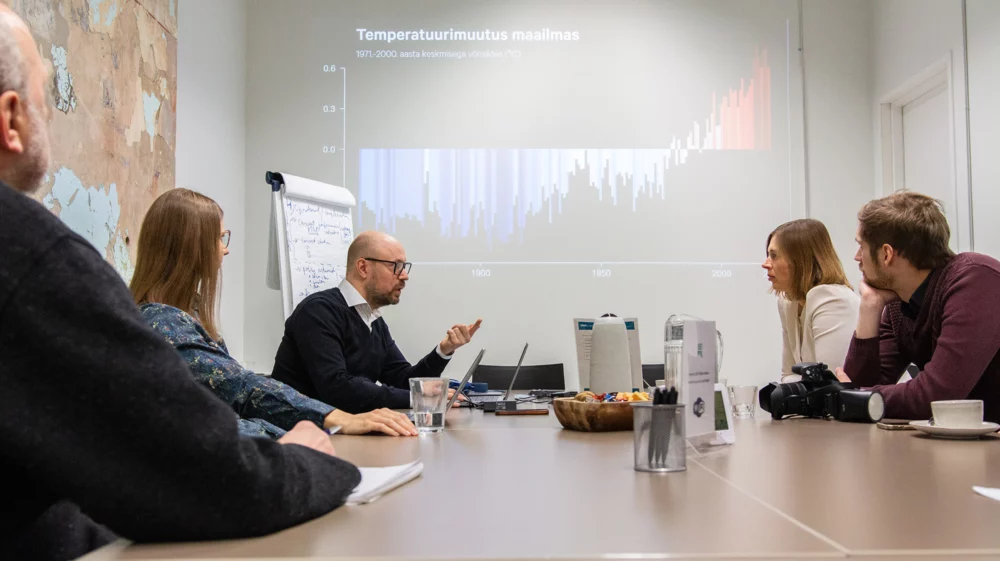
The Baltic region faces a unique set of environmental challenges, in particular pollution from industry and agriculture. SEI provides knowledge and enhances collaboration between countries and stakeholders in the region to provide solutions and seek opportunities for a more sustainable Baltic.
124 results / 1 of 14 pages
Feature / For more than three decades, SEI Tallinn has helped inform and shape climate, environment and sustainability agendas of Estonia and beyond.
Feature / SEI recently organized a discussion to explore the rapid changes and future trends in collaboration of Baltic Seas countries in the wake of Russian aggression.
Other publication / SEI researchers argue in this opinion piece for a more holistic governance of nutrients, particularly nitrogen and phosphorus, when it comes to the Baltic Sea.
Journal article / This article explores how the Baltic Sea is becoming a ‘built seascape’ and calls for governance to balance innovation, sustainability, and security.
Project / This project aims to develop circularity approaches that fit into the municipalities' framework for circular economy development.
Other publication / The policy brief highlights the increasing security, environmental, and geopolitical threats facing marine infrastructure in the Baltic Sea region.
Perspective / There is a feasible path to decarbonise the gas sectors of the Baltic states and Finland by 2050 or earlier.
SEI working paper / This working paper presents four scenarios and identifies viable options for decarbonizing the gas sector in Estonia, Latvia, Lithuania and Finland.
Feature / SEI developed methods, guidelines and tools to help the Estonian Government coherently assess its environmental and carbon footprint.