The UN Food and Agriculture Organization convenes policymakers and leaders this week to catalyse the implementation of One Health principles into agrifood systems across the globe.
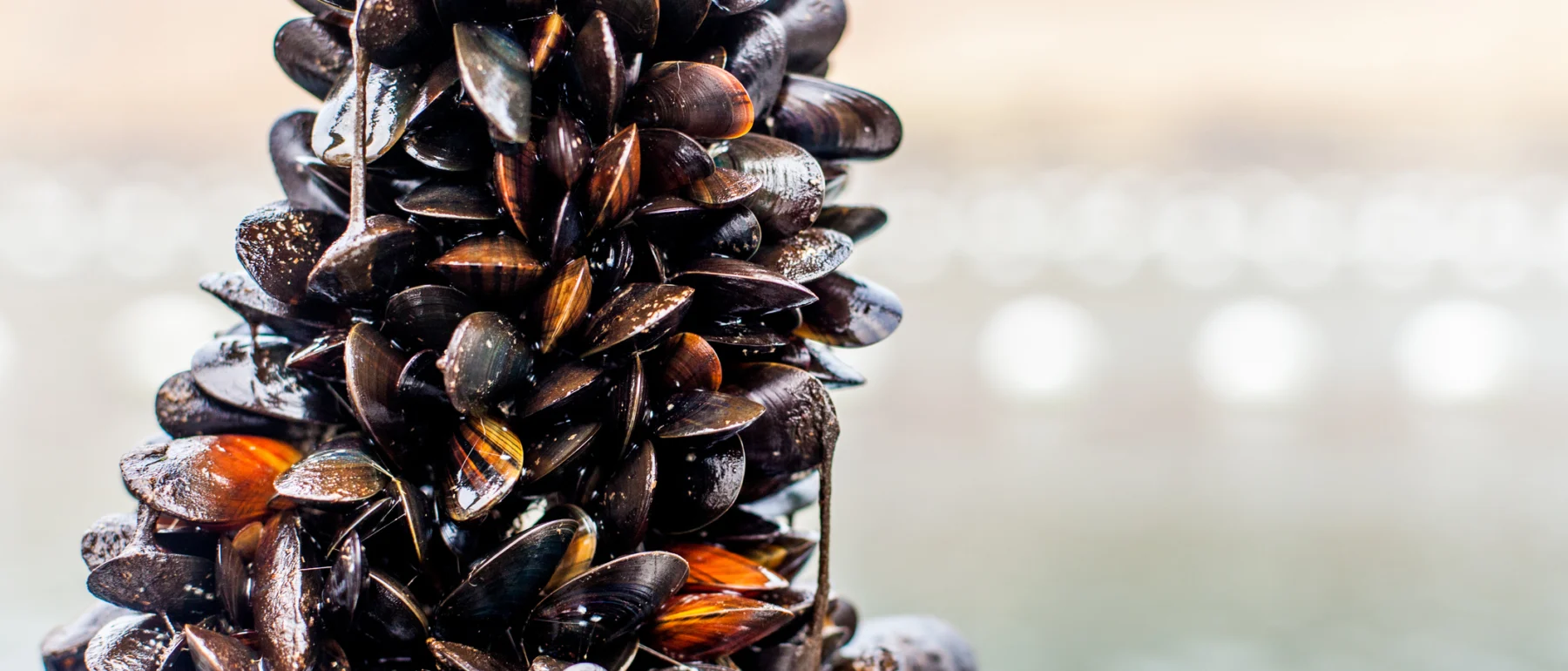
SEI experts argue that one class of species warrants greater attention for its nutritional and environmental benefits: bivalves.
This week governments, experts and practitioners gather in Rome for the UN Food and Agriculture Organization (FAO) Global Conference for Actions on One Health in Agrifood Systems. It is a welcome moment for an approach that should guide food-system transformation more broadly: the recognition that the health of people, animals and ecosystems is inseparable. Aquatic foods have so far been largely absent from that conversation, a gap worth closing given how much aquaculture is set to grow.
The FAO has called for a 75% increase in sustainable aquaculture production by 2040, measured against 2020 levels, but the success of this call hinges on what counts as sustainable. Salmon farming drives eutrophication and ecotoxicity; shrimp farming discharges effluent, has been linked to mangrove loss, and relies on antimicrobials where regulation is thin.
Both also draw heavily on wild-caught fish for feed: A recent report by the Changing Markets Foundation suggests that continued growth in high-value, feed-intensive species like these could push the volume of wild fish ground into feed to the equivalent of nearly half of the world’s 2020 wild fish catch by 2040. In West Africa, fishmeal production, foreign trawler competition and pollution are all squeezing local fish consumption. Fishmeal factories already divert enough fish to feed an estimated 33 million people a year, and in Senegal,where the industry is heavily concentrated, per-capita consumption has fallen more than 10 kg per person since 1999. Beyond feed competition, expanding aquaculture at this scale under current practices raises further concerns over pollution, biodiversity loss and animal welfare.
So what would a genuinely One Health-aligned fish and seafood system look like? A One Health lens, weighing nutrition, pollution, climate, disease risk, ecosystem integrity and animal health and welfare together, points toward a different set of species: bivalves (such as mussels, oysters and clams) and, in complementary ways, seaweeds. Both require no feed, freshwater or fertilizers, and can be produced at scale in diverse coastal environments, while avoiding many of the welfare and health risks of conventional animal farming. Bivalves alone already account for roughly 16% of global aquaculture production growth. Yet both remain marginal to research, policy and investment agendas dominated by higher-value finfish and shrimp.
The FAO has called for a 75% increase in sustainable aquaculture production by 2040 ... Beyond feed competition, expanding aquaculture at this scale under current practices raises further concerns over pollution, biodiversity loss and animal welfare.
They are also a nutrient-dense protein source: Cooked mussels and clams carry 23–26 g of protein per 100 g, comparable to 26 g in beef and 17-26 g in salmon, plus vitamin B12, zinc, selenium, copper, iron and calcium, with oysters delivering several hundred percent of the recommended daily intake per serving. On climate, life-cycle assessments consistently show this group has some of the lowest resource requirements, and energy use and emissions of any animal-source food.
Mussels, oysters and clams also work pollution control in reverse: As filter feeders, they pull nutrient pollution from the water column and lock it into biomass, sediment and shell. In Sweden, mussel farms have been used explicitly as a water-quality tool, cutting nutrient loads by up to 20% in eutrophied coastal waters. And unlike predatory finfish, which concentrate mercury as they climb the food chain, they stay remarkably clean: Average mercury in oysters and clams sits around 0.01 parts per million (ppm), against roughly 1 ppm in shark and swordfish, and a decade-long survey of Italian seafood found fewer than 1% of bivalve samples breached EU limits for cadmium, lead or mercury. An efficient filter still cuts both ways, though, taking up whatever is in the water, good or bad, which is why zoning and monitoring near clean water remain essential. Allergies are a consideration, though mollusc allergy affects around 1% of the global population, comparable to finfish.
They also appear as low-concern as animal-source food gets from a welfare standpoint. They have no central nervous system, and although the question of whether they feel pain remains unresolved, they need no feeding or enrichment and can be grown at high density without the harms that crowding causes in more active animals. Moreover, their farming can boost biodiversity rather than drain it. Restored mussel beds in New Zealand supported richer fish and invertebrate life than nearby bare sediment, though effects varied by site. And it anchors livelihoods in small-scale coastal communities, in work that needs neither a boat nor offshore fishing rights. Women, who make up roughly 40% of the small-scale fisheries workforce globally, are especially prominent in this kind of near-shore harvesting.
Despite these benefits, mussels, oysters and clams still draw comparatively little research, policy or investment attention. In the EU, they make up 49% of aquaculture output by weight, but only 28% of its value, and the sector remains mostly small operators with little capital for processing or resilience. Without deliberate support, better-financed producers of higher-value species will keep shaping how aquaculture grows.
Mussels, oysters and clams are not a universal solution: they are vulnerable to warming and acidification, require rigorous food-safety systems and will not suit every ecosystem or diet. Yet they show what a One Health-aligned aquatic food can look like: nutritious, low-carbon, low-input and capable of supporting coastal ecosystems and livelihoods while limiting new harms to animal health and welfare. Without deliberate guardrails, aquaculture expansion is likely to reproduce today’s resource-intensive patterns. With them, these overlooked blue foods could move from footnote to a meaningful part of agrifood-system transformation.
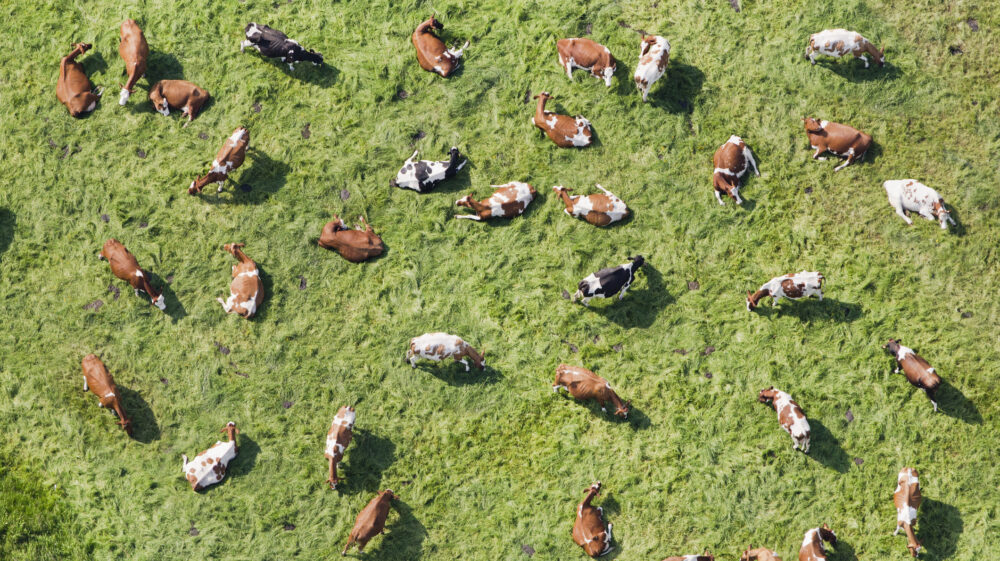
Project / The world’s appetite for animal products continues to grow, with profound implications for the environment, human health and animal welfare.
Project / Animal welfare matters for sustainable development; and sustainable development matters for animals.
Perspective / SEI's Cleo Verkuijl calls for a comprehensive approach to food system reform that supports climate, public health, animal welfare and ecosystems all at once.
SEI report / This SEI report outlines environmental concerns that challenge portrayals of the farmed insect industry as providing a sustainable dietary protein source.
Journal article / The authors examine seven common strategies for feeding everyone with a smaller carbon footprint and analyse each for their consequences and benefits.