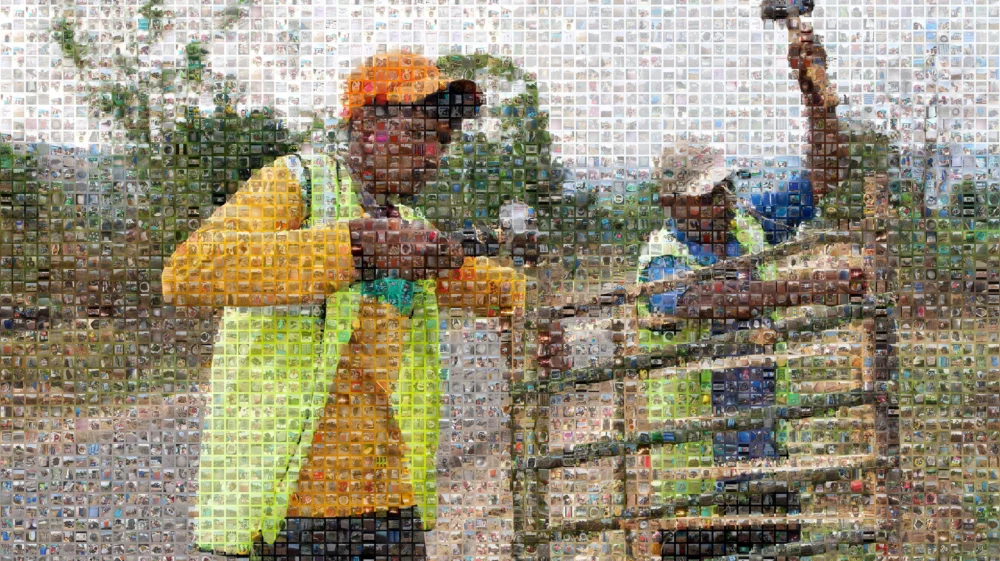
As the risks from climate change and other global trends, SEI is embarking on work to help governments, businesses and financial institutions make better decisions about where to invest, how to manage risk, and how to prepare for an uncertain future.
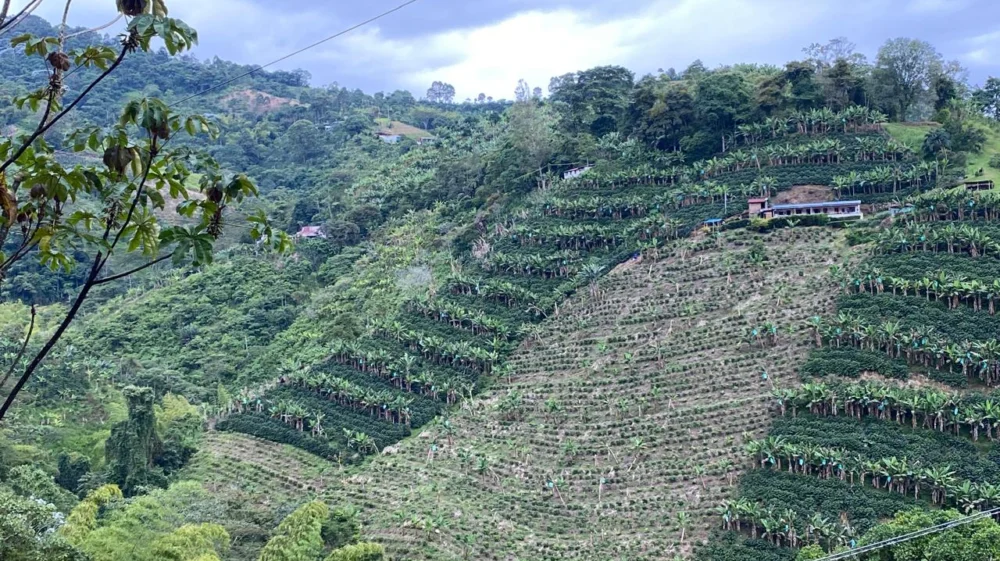
Photo: tomertu / Getty Images
2026
How can governments, businesses and financial institutions make better decisions to prepare for a world of escalating, global risks?
What approaches can help protect vulnerable communities and strengthen businesses amid growing uncertainties?
What investments can governments and private finance take to see that societies and economies not only adapt but thrive even as the impacts of climate change accelerate?
These questions underlie “Resilience rising”, a research agenda that SEI is enhancing to respond to the growing need for practical evidence and insights to inform policies and build capacities for a world buffeted by intertwined crises.
The premise of the SEI agenda is that resilience is the foundation for security of societies and prosperity of economies. The agenda responds to concerns about compounding risks from a changing climate, degraded natural environments, rising geopolitical tensions, and rapidly changing technologies.
The agenda leverages the networks of SEI centres worldwide and the institute’s longstanding expertise on key approaches – such as work on systems-oriented thinking; governance of cascading, global risks; equity in adaptation and green transitions; and the supply and demand sides of finance for sustainable development.
The agenda program focuses on the following:
Resilience is a fuzzy concept, and there are many definitions of the term. Drawing on the literature, we adopt the following working definition:
Resilience is the ability to prevent, reduce, manage, and respond to risks – primarily climate risks. Resilience is created through a combination of coping, recovery, and adaptation measures, both incremental and transformative in nature. At a minimum, the goal is to maintain core functions and practices, but, where possible, the goal is more ambitious: to enhance these functions and practices.
Here we outline our agenda:
Resilience is increasingly viewed as a foundation for security – of people, places, governments, societies and economies. SEI seeks to shed light on resilience as an essential lever for security through three distinct channels of work:
As interconnected risks and threats intensify, the question of how to govern for resilience and make decisions under uncertainty is rising up the international agenda. SEI has significant expertise in risk ownership and risk governance, alongside complementary methods including co-production, scenario analysis and stakeholder engagement. We aim to bring this expertise together to support cross-government, cross-sector and whole-of-society resilience-building approaches, from local to global scales. Our work will strengthen the processes, policies, practices and coordination mechanisms that guide resilience decision-making, clarify responsibilities and improve collaboration. By setting explicit and measurable goals, resilience investments can be evaluated and governments and other actors held accountable for their performance. We will also support decision-makers in navigating competing priorities, mapping trade-offs and opportunity costs, and strengthening policy coherence, helping governments move beyond competing resilience and security agendas towards more coordinated, informed and effective action.
Current conceptualizations of resilience often focus on maintaining or restoring the status quo, rather than addressing the underlying vulnerabilities and inequalities that create the need for resilience-building. A more transformative approach sees resilience not simply as the ability to withstand or recover from climate shocks, but as the capacity to adapt, improve and seize new opportunities as conditions change. Crucially, this means tackling structural inequalities so that resilience-building advances equity rather than deepening existing divides. Transformative resilience supports systems and societies to re-orient, evolve and potentially thrive, rather than simply returning to what was before. This remains a relatively underdeveloped field in policy and practice. SEI aims to help shape this emerging agenda, drawing on our expertise in systems thinking and just and equitable approaches to resilience, using systems mapping, futures-thinking and co-designed pathways to support more transformative and equitable outcomes.
The new research agenda will also focus on private-sector led adaptation through two dedicated research strands. One focuses on small and medium-sized enterprises (SMEs) in climate vulnerable contexts, and the other focuses on multinational companies’ incentives to invest in resilience.
Strengthening the resilience of SMEs in climate-vulnerable contexts — Small and medium-sized enterprises are the backbone of economies and communities in developing countries. They are also among the most exposed to multiple shocks and stresses, including from climate change, and the least able to absorb them. SEI’s work in this area seeks to address the following issues facing small enterprises and financial institutions:
The work seeks to help provide insights that can help investments information needed so that investments in SMEs contribute to their resilience to future shocks, not just those occurring today. SEI’s approach recognizes that the resilience of SMEs depends not only on the capabilities of individual firms but on the ecosystem around them – that is, financial service providers and lenders, the other enterprises with whom they interact, potential public investors, and the communities, families and individuals in the regions in which they operate.
With the world likely to overshoot the goal of the Paris Agreement to contain global temperature rise to 1.5°C, the need for resilience is great. At the same time, SEI’s ambition is high.
For these reasons, SEI is reaching out to potential partners and funders who can help us expand our reach and gain traction quickly.
Are you or your organization interested in working with us on this agenda? Would you like to discuss any aspect in greater detail?
To learn more, contact SEI Oxford Centre Director Andrew Fitzgibbon.
One-SEI program / Our mission is to help accelerate the allocation of capital to sustainable economic activities.
2022 - 2031 / About Finance, Renewables and Sustainable Development Goals
Initiative / This initiative explores implications of transboundary climate risks and strengthens cooperation to meet the global challenge of adaptation to climate change.
2019 / About Adaptation, Climate policy and Climate services
Project / This project promotes an inclusive climate finance ecosystem for climate adaptation and mitigation in the Asia-Pacific region.
2024 - 2029 / About Finance and Food and agriculture
Journal article / This essay argues that climate adaptation approaches should drive needed social change and challenge austerity approaches, which have undermined resilience.
30 September 2026 / About Adaptation and Public policy
SEI report / Preparedness actors in Sweden and the wider Nordics should treat cascading climate risks as core to their mandate, when they threaten Nordic food security.
3 November 2026 / About Climate policy
Journal article / Drawing on policy reviews, surveys and interviews, the research explores challenges in addressing interconnected climate risks across regions and sectors.
26 October 2026 / About Adaptation and Disaster risk
Other publication / Read a stocktake of business action on climate change adaptation, produced ahead of COP28 by SEI, World Economic Forum and PwC.
5 December 2023 / About Climate policy, Finance and Supply chains
Journal article / This Nature Climate Change column illustrates how climate resilient development (CRD) can support urgently needed climate and adaptation policies.
22 November 2024 / About Adaptation, Climate policy, Geopolitics, Mitigation and Public policy
SEI report / How do adaptation policies and governance acknowledge and respond to the systemic nature of climate change?
29 May 2026 / About Adaptation
SEI working paper / This SEI working paper outlines a new government approach focused on strategic resilience to adapt to climate change and address transboundary risks.
4 November 2025 / About Adaptation and Innovation
SEI brief / This brief informs adaptation financiers, the broader community of adaptation scholars, and practitioners in their efforts to scale up support for LLA.
5 September 2025 / About Finance
SEI report / This report examines evidence of the outcomes of locally led adaptation, barriers that limit financial support, and measures that can bridge the funding gap.
30 September 2026 / About Adaptation
Other publication / Read an in-depth assessment of transboundary climate risks to agriculture, food security, trade and infrastructure, and ecosystems on the island of Ireland.
9 December 2024 / About Adaptation, Climate policy and Food and agriculture
Journal article / Identifying where EU adaptation can reduce systemic climate risks using stakeholder-informed network analysis from the CASCADES project.
15 October 2025 / About Climate policy, Disaster risk, Food and agriculture and Supply chains
Perspective / Asia’s next financial revolution must make climate adaptation finance accessible to vulnerable households and small businesses.
15 October 2026 / About Adaptation, Climate policy and Finance
Perspective / In this perspective for Climate Home News, Kate Williamson and Magnus Benzie outline how the UK can build public support for climate adaptation policy agendas.
26 May 2026 / About Adaptation, Disaster risk, Innovation, Participation and Public policy
Perspective / This perspective argues for a systemic approach by integrating mitigation and adaptation by default into every policy, budget and planning decision.
24 April 2026 / About Adaptation and Mitigation
Past event / SEI and UNFCCC will discuss how youth delegates and negotiators can build their skills and knowledge to join the climate negotiations.
17 November 2026 / About Adaptation and Climate policy
Perspective / SEI Africa Centre Director Niall O´Connor argues that underinvestment in research is weakening Africa’s ability to respond to climate change
16 November 2026 / About Adaptation and Finance
Journal article / A proposed application of Factors Constellation Analysis shows how combinations of critical factors produce different (im-)mobility outcomes.
11 November 2026 / About Adaptation