part of Agroecology
Start readingBuilding a research agenda means questioning the foundations of what we take for granted. Too often, sustainability efforts focus on making existing systems more resilient – helping them adapt, recover or bounce back. Yet many of today’s crises are rooted in paradigms we continue to preserve, even when they demand fundamental transformation.
SEI’s emerging research agenda brings agroecology and degrowth into dialogue to challenge purported “solutions” within the current agri-food system. Bringing these fields together invites us to reimagine what thriving looks like – not growth without limits, but prosperity and sufficiency within them. Together, they push us to rethink how we define progress and development in agri-food systems and beyond, in a world shaped by ecological boundaries.
Transformative ideas rarely emerge in isolation. They flourish when conversations cross paths. In recent years, agroecology and degrowth have met increasingly on shared ground – and SEI is helping to carry that dialogue forward through research, facilitation and convening.
As part of the Amplifying Stories of Agroecology Practices and Principles (ASAPP) project, SEI researchers Aziliz Le Rouzo and Nhilce Esquivel led workshops at the ISEE Degrowth Conference in Oslo (June 2025) and the Agroecology Europe Forum in Malmö (October 2025). Both workshops drew on a case study from Alnarp’s Agroecology Farm, the first in a series mapping agroecological practices across the HLPE 13 Principles of Agroecology in diverse global contexts.
Leon Pepe Biundo, Production Manager at Alnarp’s Agroecology Farm.
Photo: Nhilce Esquivel / SEI.
Agroecology Europe Forum Activities at the Farm.
Photo: Nhilce Esquivel / SEI.
Located in southern Sweden on less than one hectare, Alnarp’s Agroecology Farm challenges common assumptions about what small-scale farming can achieve. Its contributions go far beyond food production – creating non-market, relational and regenerative forms of value through ecological care, community cohesion and shared knowledge. Yet these contributions remain undervalued by dominant political and economic systems.
This raises a critical question: if we want to move beyond the status quo and build new agri-food paradigms, how can transformative initiatives thrive in systems still shaped by the structures they seek to change? This became the central question explored in both workshops.
Idea sharing and mapping at the ISEE Degrowth Conference during the workshop "From principles to practice: Envisioning post-growth food systems through agroecology."
Photo: Nhilce Esquivel / SEI.
Workshop at Alnarp’s Agroecology Farm during “From Alnarp’s farm to future realities: A workshop on agroecology and degrowth,” held at the Agroecology Europe Forum.
Photo: Lina Ågren Törnros.
By bringing agroecology and degrowth into each other’s spaces, participants examined how insights from each field could expand the transformative potential of the other – and how the futures we imagine shape the questions we ask today.
The takeaway was clear: if we are serious about transformation, we cannot keep tweaking the edges of broken agri-food systems. We need to think differently – and ask harder questions. From this crossroads of ideas and practice, several critical questions emerged to guide a research agenda: which transformative practices can be scaled without being co-opted? whose knowledge shapes solutions? and how can transitions genuinely redistribute power?
Insights from the intersections of agroecology and degrowth point to a key lesson: transformative change requires strategies that both engage with and transcend dominant agri-food systems.
Across contexts, agroecological initiatives are creating spaces that operate within existing structures while strategically bypassing them. These “bypass strategies” appear in practices such as:
These practices cultivate autonomy and resilience while challenging the dependencies embedded in industrial agri-food supply chains, financial systems and regulatory frameworks.
Such strategies often emerge where dominant models fail – where farmers and communities, confronted with exclusion or crisis, have constructed their own infrastructures of resilience. Their viability depends less on integration into existing markets than on reconfiguring relationships of production, exchange and care.
In doing so, they advance an alternative understanding of “scaling”: not expansion through incorporation, but amplification through solidarity, mutual learning and the weaving of networks grounded in shared values and interdependence.
Research at the intersection of agroecology and degrowth can illuminate how these bypass strategies sustain autonomy while staying connected – and what enables them to persist without being co-opted. The question is not how to integrate such initiatives into the mainstream, but how they can inform the emergence of new socio-economic imaginaries in which thriving involves reshaping, rather than repairing, the dominant agri-food system.
If agroecology teaches us how to live well within ecosystems, and degrowth teaches us how to live well within limits, then the task ahead is to connect them – and to do so in ways that confront and redistribute power, address knowledge injustices, and keep justice and equity at the centre.
A research agenda for agroecology and degrowth must confront the politics of knowledge. Too often, “solutions” are imposed from the top down, sidelining Indigenous, traditional and local knowledge systems that have sustained communities for generations. Decolonizing knowledge begins with listening – not as consultation, but as recognition.
This work is not about adding “diverse voices” to existing structures; it is about shifting who sets research priorities and who benefits from the results.
Community knowledge is frequently translated into policy language that strips it of context and power. When research “includes” local voices while retaining control over questions, timelines and outcomes, it reproduces the same hierarchies it seeks to challenge. True co-creation requires reciprocity – shifting from producing knowledge about communities to producing knowledge with them.
Agroecology and degrowth both challenge dominant ideas of progress by grounding insights in everyday realities. When communities define what matters – what sufficiency and wellbeing mean on their own terms – knowledge recovers its ethical grounding.
A central question follows: how can institutions supporting agroecology and degrowth decolonize knowledge production so that funding, authorship and research priorities are guided by the communities whose knowledge comes from working the land every day?
A just transformation of capitalist agri-food systems cannot occur without confronting the deep social inequalities that sustain them. Capitalism, colonialism and heteropatriarchy are intertwined structures shaping both our food systems and our daily lives. A research agenda for degrowth and agroecology must therefore be grounded in feminist visions that expose inequality and redistribute power.
Feminist scholars and activists, especially those working with decolonial perspectives, have long expanded both fields. Their work highlights care and unpaid labour as integral to resilient and just food systems, not external to them. In a socially and ecologically sustainable degrowth future, care must move beyond the private/public divide and become part of shared and jointly pursued social reproductive work.
Feminist research also shows how power relations based on gender, class, ethnicity, sexuality and other intersecting differences shape inequitable outcomes in agri-food systems. Confronting these intersecting forms of power and ensuring equitable redistribution is essential for any transition toward just and sustainable degrowth-agroecological systems.
This growing body of evidence makes certain questions unavoidable: how can analysing unequal power relations enable equitable redistribution in a post-growth agroecological system? How can care and social reproduction become integral to such a system?
Feminist perspectives, in all their diversity, offer ambitions, visions and tools commensurate with the transformative aims of both agroecology and degrowth. They must be central to any research agenda for agri-food system change.
The issues and questions outlined above are not separate challenges but fundamentally interconnected opportunities. Addressing them together is essential for moving toward justice and sustainability in agri-food systems. They form the starting points of a research agenda we aim to pursue – within our institute, with partners and with communities worldwide through reciprocal, reflexive and co-creative learning processes.
If agroecology teaches us how to live well within ecosystems, and degrowth teaches us how to live well within limits, then the task ahead is to connect them – and to do so in ways that confront and redistribute power, address knowledge injustices, and keep justice and equity at the centre.
Project / ASAPP works with farmers worldwide to document and share real examples of agroecology in practice, bridging theory and action for sustainable food systems.
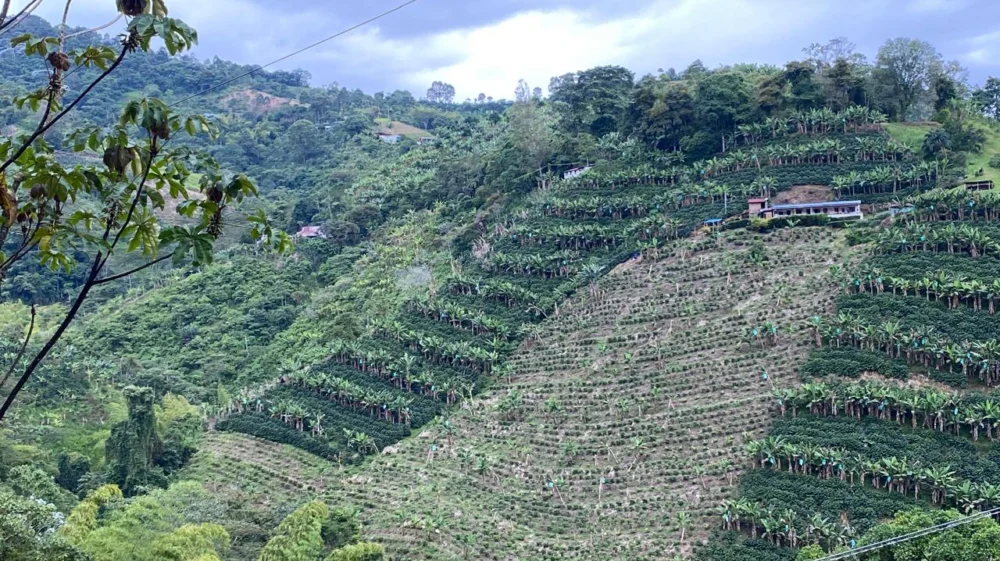
Feature / Coffee grower José María González Salazar is trying to preserve trees and crystal clear water through agroecology and multifunctional landscapes.
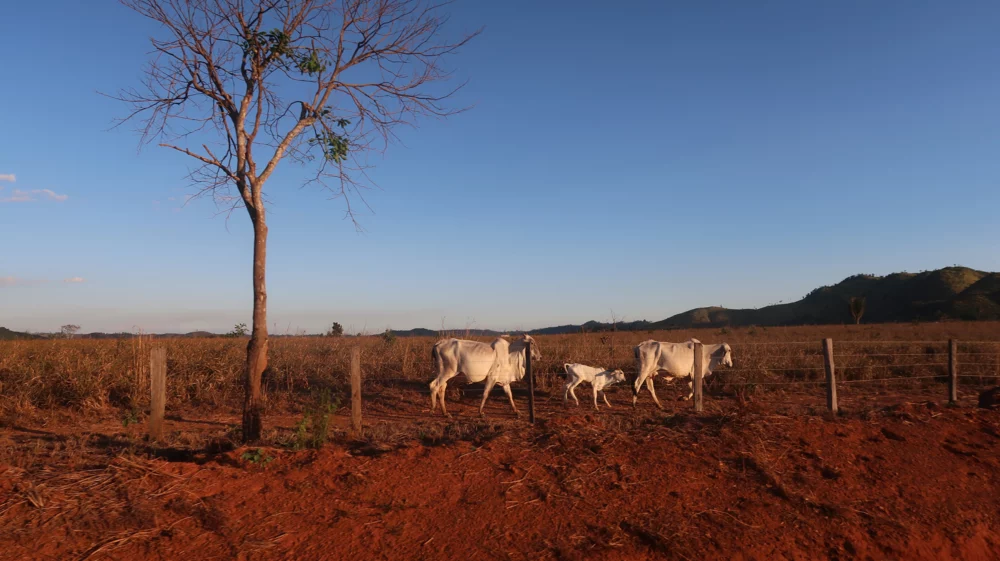
Journal article / This research explores how cattle ranching shapes the transition from forest frontiers to large-scale agriculture in the Brazilian and Colombian Amazon.
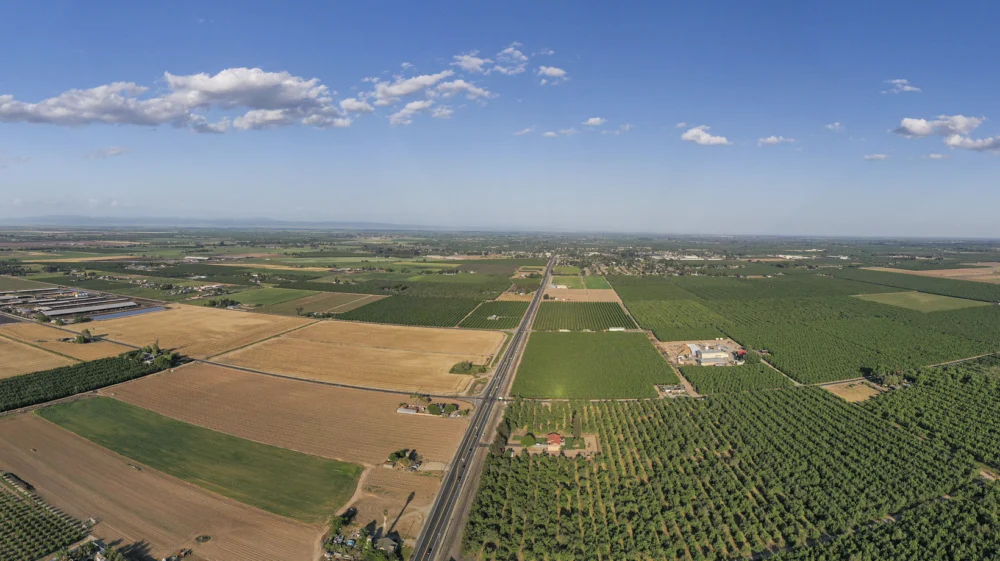
Project / SEI is creating an automated tool that processes remotely sensed data to determine cropping patterns in agricultural areas in California.