part of Agroecology
The fourth ASAPP case study by SIANI focuses on Maramche Agroecological Village, a geographically defined community adopting integrated agroecological practices at the landscape level.
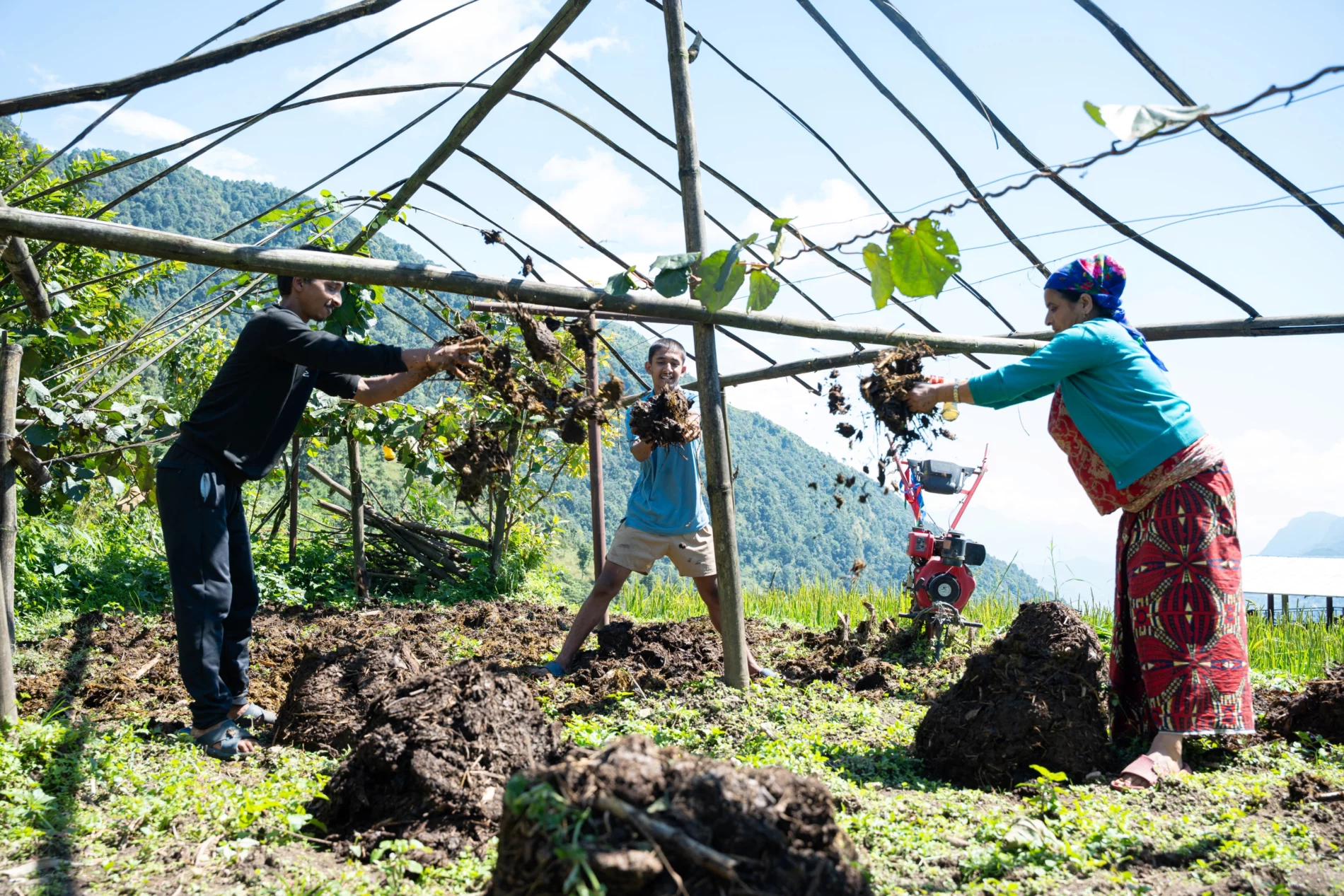
Integrating farmyard manure into the soil. Maramche Agroecological Village, in Annapurna Rural Municipality, Kaski District, Nepal.
Photo: GrowInnova / LI-BIRD (used with permission)
This case study from the “Amplifying Stories of Agroecology Principles and Practices” (ASAPP) project series highlights Maramche Agroecological Village, in Annapurna Rural Municipality, Kaski District, which consists of 36 agricultural households eager to adopt agroecological principles for sustainable food production.
This approach fosters environmental stewardship, food and nutrition security, and community resilience. The establishment of an agroecological model village is an intensive process that involves not only the members of the village and the project staff, but also all concerned stakeholders in the community, to collectively contribute to the sustainability of the applied approaches.
All households in Maramche village are part of Shree Pragatisheel Agriculture Cooperative and Annapurna Community Seed Bank, fostering equal access to services and knowledge exchange. By adopting various agroecological technologies, the community aims to eliminate chemical fertilisers and pesticides. Mr. Indra Adhikari, an active member and progressive farmer, shares insights on their household practices that contribute to establishing a model village. He and his family of five demonstrate that combining indigenous knowledge with agroecological farming can create a viable and profitable self-sustaining ecosystem.
Amplifying Stories of Agroecology Practices and Principles (ASAPP) is an initiative to spotlight practical applications of the 13 agroecological principles in different agricultural settings, mapping local farming methods against these principles to demonstrate real-world applications and provide farmers with tools to align with emerging standards. Its goal is to empower farmers and promote the widespread adoption of agroecological practices by making these methods more visible and accessible.
Feature / From grassroots movements to innovative farming practices, see how agroecology is reshaping the way we grow, distribute and consume food globally.
Project / ASAPP works with farmers worldwide to document and share real examples of agroecology in practice, bridging theory and action for sustainable food systems.
Project / The Swedish International Agricultural Network Initiative – SIANI – is a global network that supports and promotes dialogue and action around food systems.
Other publication / This leaflet illustrates how Alnarp’s Agroecology Farm applies the 13 agroecological principles in practical farming settings.
Other publication / This leaflet illustrates how Jonai Farms and Meatsmiths applies the 13 agroecological principles in practical farming settings.
Other publication / This leaflet illustrates how Panela Cheia Agroecological Farm applies the 13 agroecological principles in practical farming settings.