SEI York’s Air Quality, Climate and Environmental Change (AQCEC) research group works at the intersection of air pollution, climate change and public health. Since the group began in the 1990s, our thinking has evolved; here’s what we have learned along the way.
Nigeria: quantifying health benefits in NDCs
Developing nations often struggle to justify the costs of climate mitigation to their populations and policymakers. We supported Nigeria in quantifying the health benefits of its climate goals, showing exactly how many early deaths could be prevented. Nigeria became the first country to include quantified health benefits in its NDC, noting that achieving its 47% GHG reduction target could prevent approximately 30,000 early deaths from air pollution.
Ghana: NDC update and health co-benefits planning
Air pollution causes around 28,000 premature deaths in Ghana every year, yet the public health benefits of climate action are rarely quantified in national policy. Since 2013, Ghana has worked with the CCAC to develop a National Action Plan on SLCPs, finalized in 2018. SEI was a key technical partner, working with Ghana’s EPA and Ministry of Environment to build an emissions inventory, model baseline scenarios, and develop the planning guidance. In 2021, with continued CCAC and SEI support, Ghana integrated these measures into its updated NDC, submitted to the UNFCCC in November 2021, translating the SLCP plan into a formal national climate commitment.
Air pollution, climate change and environmental shifts are among the most significant threats to human health, food security, ecosystems and people’s livelihoods. At the University of York, the SEI Air Quality, Climate, and Environmental Change (AQCEC) research group aims to measure these threats and create effective solutions.
Air pollution and climate change are two sides of the same coin. Crucially, air pollutants and greenhouse gases come from the same sources: transport, industry, agriculture, the residential sector and waste. That overlap is also an opportunity: the same strategies that cut emissions can also improve climate, air quality, and public health.
Unfortunately, these challenges fall unevenly. Climate change and poor air quality affect the poorest and most disadvantaged communities most severely, and many of the nations with which we work contribute the least to global emissions while carrying an unequal share of the harm.
This is where work from the 19-member AQCEC research group, at SEI York, becomes essential. By bringing together evidence on air quality, health, climate and equity, we help governments build integrated strategies that meet global climate goals, such as the Paris Agreement and the Global Methane Pledge, while delivering immediate benefits to the people living with the consequences. Pursuing integrated action offers a critical opportunity to maximize co-benefits and avoid trade-offs.
Before 2021, there was no international agreement targeting methane specifically, even though it's the second-largest contributor to climate change. We co-authored the Global Methane Assessment, providing the scientific foundation for what became a new global commitment. 159 countries have now signed the Global Methane Pledge, committing to a 30% reduction in methane emissions from 2020 levels by 2030.
Prof Johan C. I. Kuylenstierna, Senior Researcher at SEI York
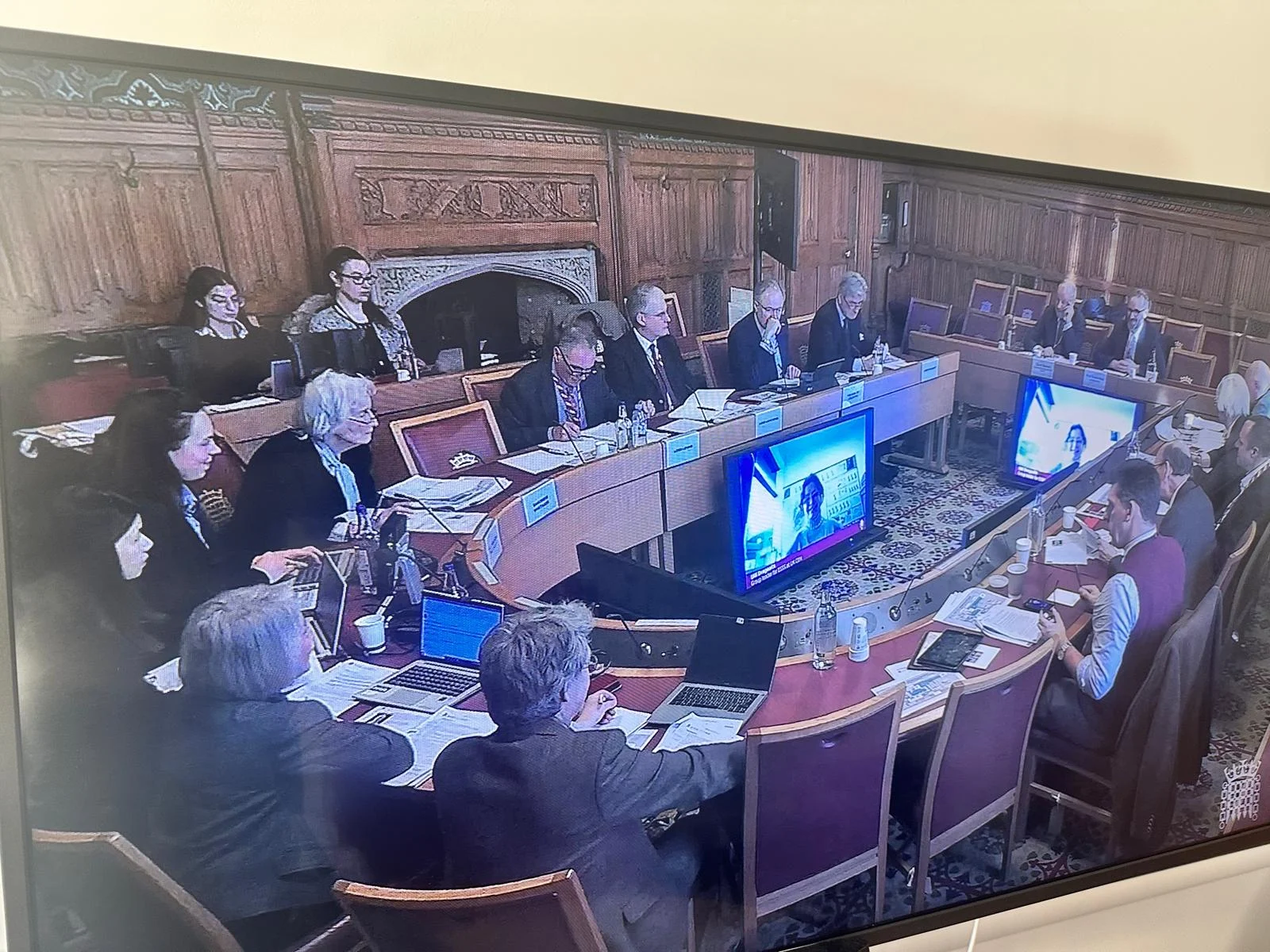
Kevin Hicks giving evidence at The House of Lords Nitrogen Inquiry
Colombia: reducing black carbon to improve health and climate outcomes
Cities like Bogotá and Medellín suffer severe air pollution, with thousands of premature deaths linked to black carbon. Since 2016, we’ve provided long-term capacity-building that helped produce Colombia’s first national black carbon inventory and an NDC co-benefits assessment. Colombia’s updated NDC now commits to cutting greenhouse gas emissions by 51% and black carbon by 40% by 2030, making it one of the first countries to set a dedicated black carbon target alongside its climate goals. The strategy includes stricter vehicle standards, cleaner off-road machinery, clean-cooking programmes, and city-scale initiatives.
Our work builds on a legacy going back to the 1980s, when acid rain was one of Europe’s defining environmental problems. It was also an early lesson in why this work has to be collaborative: the Scandinavian countries hit hardest by acid rain were not the main polluters, so they could not solve the problem on their own. Researchers in York began modelling emissions, mitigation costs and atmospheric transport to help inform negotiations under the Convention on Long-Range Transboundary Air Pollution. This Convention is an international treaty which has reduced regional air pollutant emissions by as much as 80% and continues to provide a framework for tackling transboundary air pollution
During the 1990s, as air pollution issues accelerated across Asia, Africa and Latin America, AQCEC extended that approach globally. While efforts to address air pollution improved air quality in Europe and other regions, rapid fossil fuel-driven economic growth in many areas worsened pollution problems. Many parts of the world still lacked practical frameworks and tools to help governments turn scientific insights into effective policies. Meanwhile, national and international climate strategies were still in their infancy. The connection between climate change and air pollution, both as interconnected environmental challenges and as opportunities for coordinated action to gain multiple benefits and avoid trade-offs, was not widely recognized.
In response, we supported regional agreements and networks across Asia and Africa, including the Air Pollution Information Netwrok for Africa (APINA) in 1997, the Malé Declaration in South Asia and four further agreements across Southern, East, West and North Africa. In 2004, we co-founded the Global Atmospheric Pollution Forum with the International Union of Air Pollution Prevention and Environmental Protection Associations (IUAPPA) to connect these efforts across regions.
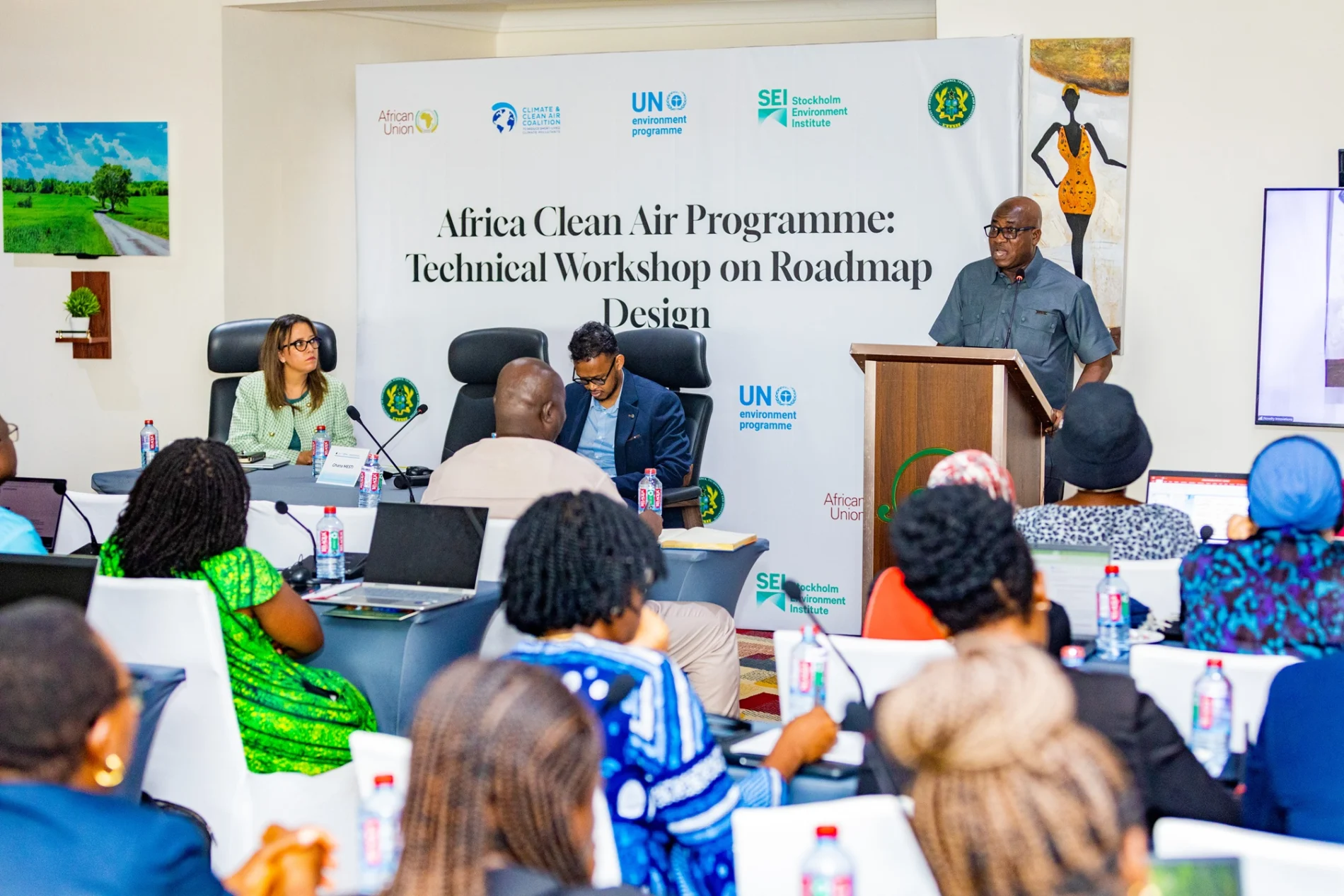
Africa Clean Air Programme workshop, Ghana, 2025
Photo: CCAC
Africa: a continent-wide clean air programme
The integrated assessment demonstrated how a suite of 37 measures across five key polluting sectors could bring multiple benefits while avoiding unwanted trade-offs. The African Union Commission, the African Ministerial Conference on the Environment, and the UNEA 6/10 Resolution on Regional Cooperation in Air Pollution have all acknowledged the Assessment and the implementation of its recommendations as an African Clean Air Programme (ACAP), which we are now coordinating.
In 2008, we hosted a meeting through the Global Atmospheric Pollution Forum on the links between air pollution and climate change. That meeting set in motion a global assessment with UNEP and the World Meteorological Organization, which we coordinated: the 2011 Integrated Assessment of Black Carbon and Tropospheric Ozone, which helped establish the global importance of short-lived climate pollutants (SLCPs) .
Since 2009, AQCEC has led research on SLCPs a group of pollutants including methane, black carbon, tropospheric ozone and hydrofluorocarbons (HFCs), nearly all of which affect both climate and air quality. Our early research showed that targeted cuts to methane and black carbon could reduce global warming by around 0.5°C by mid-century while preventing millions of premature deaths. We also contributed to major international assessments with UNEP, including the Global Environment Outlook publications.
In 2012, that work led to the formation of the Climate and Clean Air Coalition (CCAC), which is still the world’s only global initiative dedicated to reducing SLCPs and securing climate and air quality co-benefits together. Since 2013, working through the CCAC’s National Planning hub, we have focused on turning that science into plans that countries can implement.
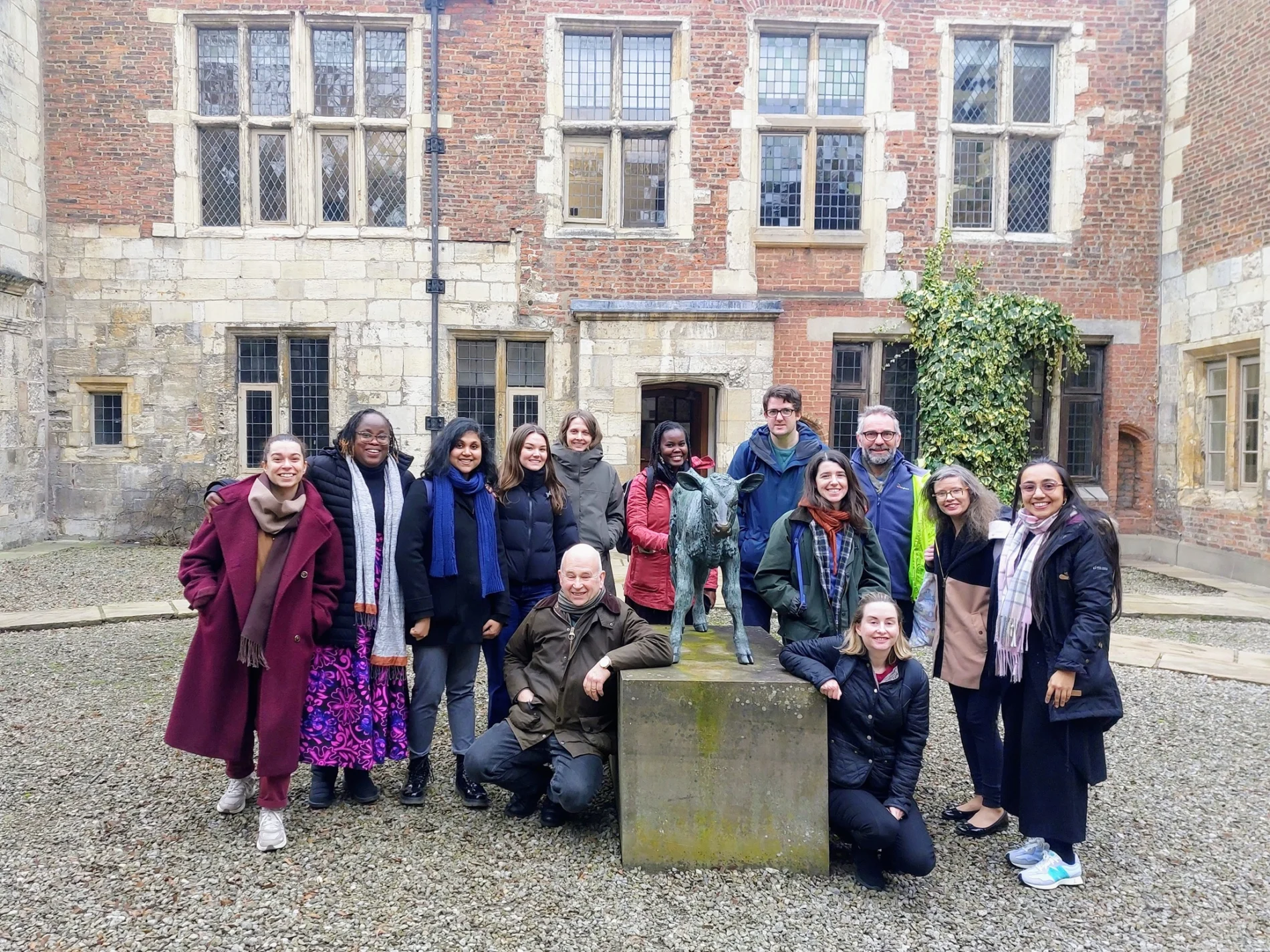
SEI York air quality research team
Working with the private sector
Companies have long lacked standardized ways to measure air pollution across complex supply chains. We partnered with IKEA and the CCAC to build a practical guide that translates the science into steps any business can follow. The World Economic Forum has since adopted it, and it’s now being introduced across the global freight transportation industry. This is a genuine shift in how businesses think about their responsibility for air pollution, not just carbon.
Translating science into policy: Scientific evidence alone rarely influences policymakers, who balance multiple competing priorities. We have learned that clearly communicating the local benefits, for instance, explaining that cutting SLCPs like black carbon also tackles local air pollution issues and complements rather than competes with carbon dioxide reduction, helps policymakers see these as connected strategies.
Working with incomplete and fragmented datasets: Data gaps are common, not unusual, in many of the countries we work in. Instead of seeing this as a problem, we use tools like LEAP that can handle incomplete data from the start, allowing countries to model emissions and test solutions now, then improve them as better data becomes available.
Institutional instability and long-term impact: Government turnover can disrupt continuity overnight. We responded by embedding our methods and capacity within local institutions, universities, and non-governmental partners, rather than just ministries. So, the work outlasts any single official or project cycle.
Adapting global science to local contexts: Global frameworks cannot be applied uniformly across countries. Economic conditions, governance structures and environmental priorities vary too widely for a one-size-fits-all approach, so every adaptation depends on close collaboration with regional stakeholders who understand the local context better than we ever could.
Building lasting partnersips across borders: Our work relies on building long-lasting relationships with international colleagues through equal partnerships rooted in trust, respect, and shared learning. Together, we enhance planning, support policy, and implement measures to help address air pollution and climate issues. These partnerships are vital for developing solutions aligned with local priorities and for creating lasting impact.
By demonstrating co-benefits of action, we help redefine air pollution and climate policy, but evidence and commitments are just starting points. With climate and pollution crises, we must go beyond science-based approaches to support their implementation. That’s where we are focusing next, working with partners to deploy evidence-based strategies that protect both the planet and the people living on it.
The SEI Air Quality, Climate and Environmental Change research group at the University of York carries out research and analysis on air pollution and climate change and develops mitigation solutions. Building on the foundational leadership of Johan Kuylenstierna, the group provides evidence-based insights to inform planning and strengthen capacity on air quality and climate issues for government, city officials, the private sector, international bodies, and other stakeholders.
Project / SEI researchers and partners will create three assessments on economics, agriculture and food systems, and nitrous oxide to aid decision-making on SLCPs.
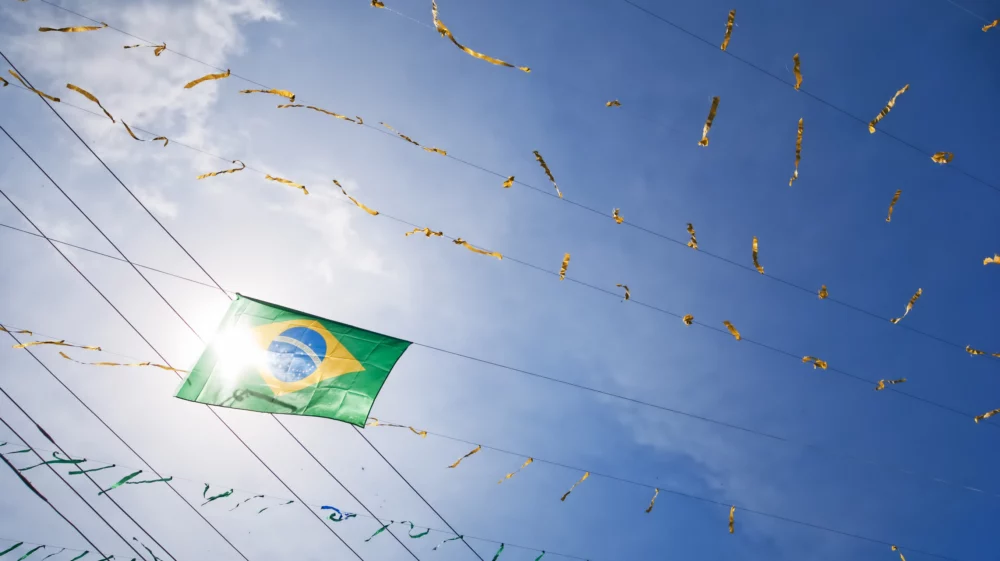
Project / SEI and CCAC support Brazil's Ministry of Environment and Climate Change in developing a National Plan on SLCP to combat climate change and air pollution.
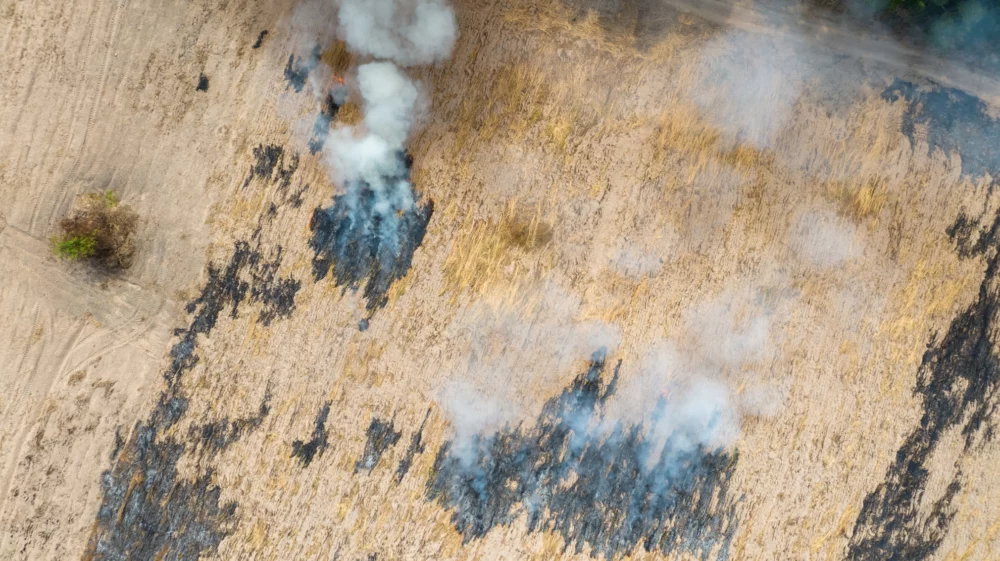
Project / This project aims to gather evidence and develop roadmaps to encourage investment in initiatives that lower black carbon emissions.
Other publication / The 2026 global economic assessment for climate and clean air action highlights the costs of inaction. Each year of delay could cost over USD 1.5 trillion.
Other publication / The 2024 Global Nitrous Oxide Assessment identifies opportunities to reduce nitrous oxide emissions by over 40%, focusing on the food systems sector.
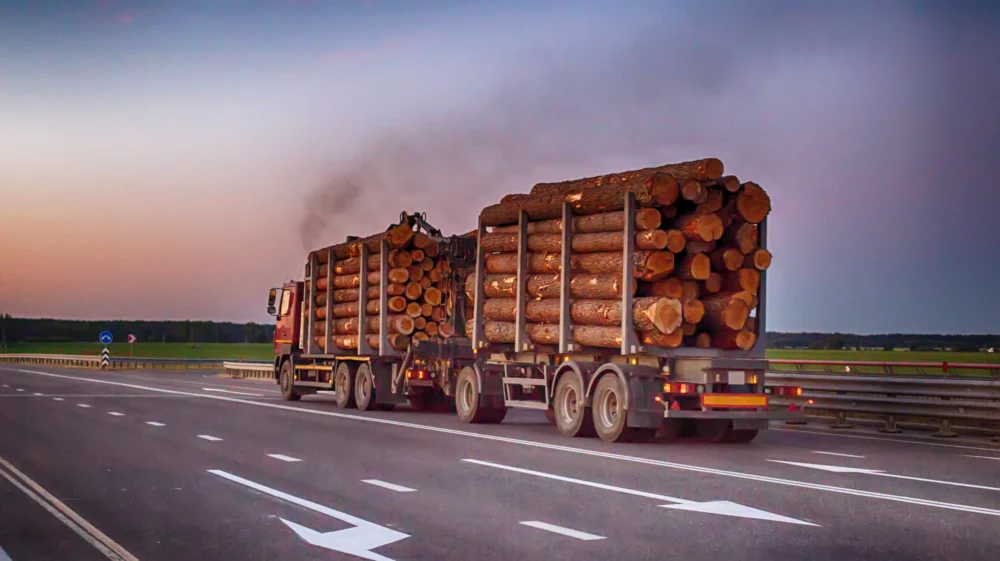
Other publication / The 2025 Integrated Guide for Business GHG and Air Pollutant Emission Assessment updates the 2022 Practical Guide for Business.