Here you can find research, publications, perspectives and events related to SEI US.
If you are looking for updates and information from the broader North American region, please follow this link.
1482 results / 35 of 124 pages
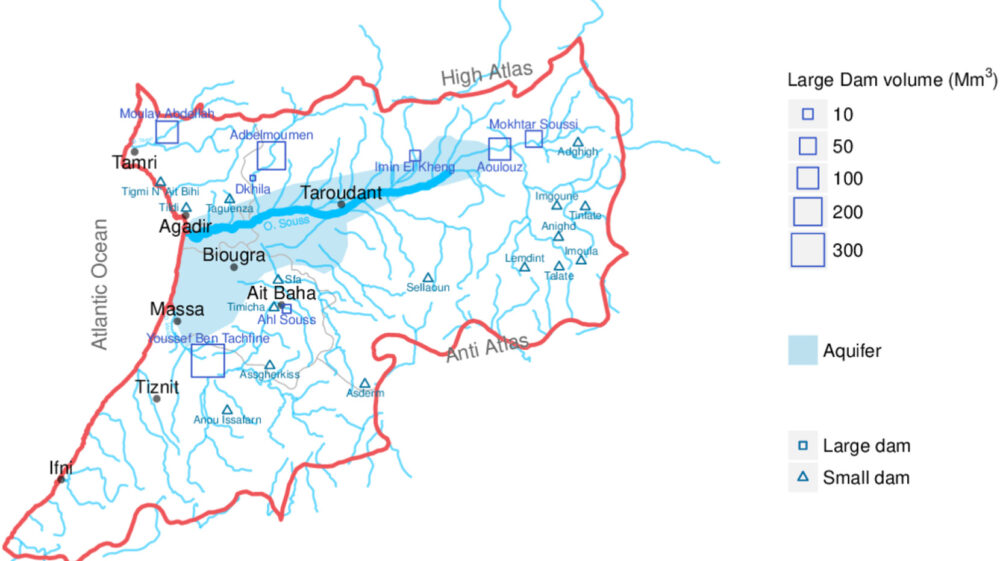
Journal article / SEI scientists used a stakeholder-driven method to explore solutions to a Moroccan river basin's water scarcity through the lens of the water-energy-food nexus.
Other publication / A new FAO report co-authored by SEI researchers identifies agricultural water investment trends since 2019 and outlines priorities for future financing.
Past event / This online session at World Water Week reviews Bolivia WATCH, a program that connects water sanitation and watershed management in Bolivia.
SEI brief / A new tool developed by SEI's Bolivia WATCH team integrates sanitation and hygiene considerations into watershed planning.
Past event / SEI researchers explore supply, demand, and source-water preservation alternatives for the urban water system in Bolivia to achieve SDG 6.
Feature / A new FAO report co-authored by SEI scientists carefully targeted investments in agricultural water can have a major impact on sustainable development.
Feature / Join our SEI-hosted sessions at World Water Week from 23 August-1 September both in-person and online to discuss sanitation, biodiversity, climate and the SDGs.
Other publication / SEI's Peter Erickson co-authored report that outlines the flaws in the US' environmental review of fossil fuel projects and proposes some fixes.
Journal article / This study examines how climate finance coordination occurs at the national level in the two developing countries of Kenya and Zambia.
SEI podcast / This episode presents how current water management approaches consider natural and social processes beyond traditional political boundaries.
Media coverage / The How to Save a Planet podcast consults SEI Senior Scientist Derik Broekhoff about whether the 2022 FIFA World Cup can really call itself climate neutral.
SEI brief / This brief highlights SEI's efforts to provide low- and middle-income countries with tools and training needed to integrate climate and development planning.