Inclusive Citizen Science is SEI York’s citizen science research group. Established in 2008, we are the longest-running academic research group on citizen science in the UK. Here we briefly explain how our group began and how it has grown and evolved, developing a particular focus on improving best practice in citizen science and inclusive engagement for environmental sustainability.
For our purposes, citizen science refers to any activity where researchers (often scientists) partner with members of the public to answer scientific questions. The use of citizen science methodologies has grown exponentially in recent years as scientists, policymakers and non-governmental organizations recognize the value of conducting research in this way. Citizen science has the potential to generate data at scale, democratize knowledge production, and connect people with environmental issues and research that affects their lives.
Inclusive Citizen Science is led by Sarah West and currently has 16 members across SEI, 14 of whom are based at SEI York. Our work sits at the intersection of citizen science, environmental sustainability and inclusive practice.

The group was founded in 2008 as part of a pioneering citizen science project called OPAL (Open Air Laboratories), funded by the Big Lottery Fund and led by Imperial College London and the Natural History Museum, London. OPAL hired “community scientists” across the UK to engage people with their local environments. One of these was Sarah West, who was recruited to work in Yorkshire, supporting individuals and groups to explore their local environment through surveys on soil, air, water, climate and biodiversity. Over time, Alison Dyke and then Rachel Pateman joined the group, also working on OPAL.
We have helped people connect with nature and participate to biodiversity recording.
Photo: Michał Bożek / Unsplash
Intrigued by OPAL’s approach to ‘evaluation’, which didn’t effectively measure the impact of the project, Sarah pursued a PhD researching evaluation practices in environmental education (at that time, “citizen science” was not a widely used term). She uncovered a mismatch between what practitioners wanted to demonstrate through evaluation and what they were actually measuring.
As OPAL ended, we continued to use citizen science in other projects and began developing and refining our own approach to planning, conducting and evaluating research.
Our experiences with OPAL, and subsequent work with the Moors for the Future Partnership designing a community science project, highlighted that typical participants in environmental citizen science in the UK were white and well-educated. While we could reach other demographic groups, this required considerable effort. In 2015, we conducted a study on why people take part in citizen science, funded by the Department for Environment, Food & Rural Affairs (DEFRA), which found that this under-representation was consistent across UK environmental citizen science projects.
This set us on our current path of prioritizing inclusive and participant-centred research. We have investigated how our work creates impact, why participant diversity matters and ways to increase inclusivity and diversity in citizen science. This has also led us to a growing interest in co-created and collaborative approaches, reflecting a wider shift in the field. Increasingly, projects now involve participants in stages of the scientific process beyond just data collection.
We have explored ways to increase inclusivity and diversity in citizen science, and why that is important.
Photo: Compassionate Eye Foundation/Natasha Alipour Faridani / Getty Images
Building on the group’s interests and experience, in 2015 we began to use this approach with parents of young children, helping them to access and assess scientific evidence and identify questions they wanted research to address. Through the Parenting Science Gang project, eight groups of parents successfully collaborated with experts to co-produce studies to answer their questions.
Also in 2015, we began working beyond the UK, beginning a series of partnerships with colleagues at SEI’s Africa centre. Using citizen science approaches, we studied the impact of air pollution on human health, first in Kenya and then in Ethiopia. This work contributed to SEI’s five-year Initiative on City Health and Wellbeing, which brought together researchers across SEI’s York, Africa, Asia, Tallinn and US centres to investigate how rapidly growing cities affect the health and wellbeing of residents.
We have investigated how rapidly growing cities are affecting the health and wellbeing of residents.
Since 2022, the group has grown rapidly. We currently have 14 members at SEI York, including researchers, PhD students and specialist support staff. We have also expanded to include researchers from our Oxford and Latin America centres and are developing closer ties with others across SEI who use participatory methods.
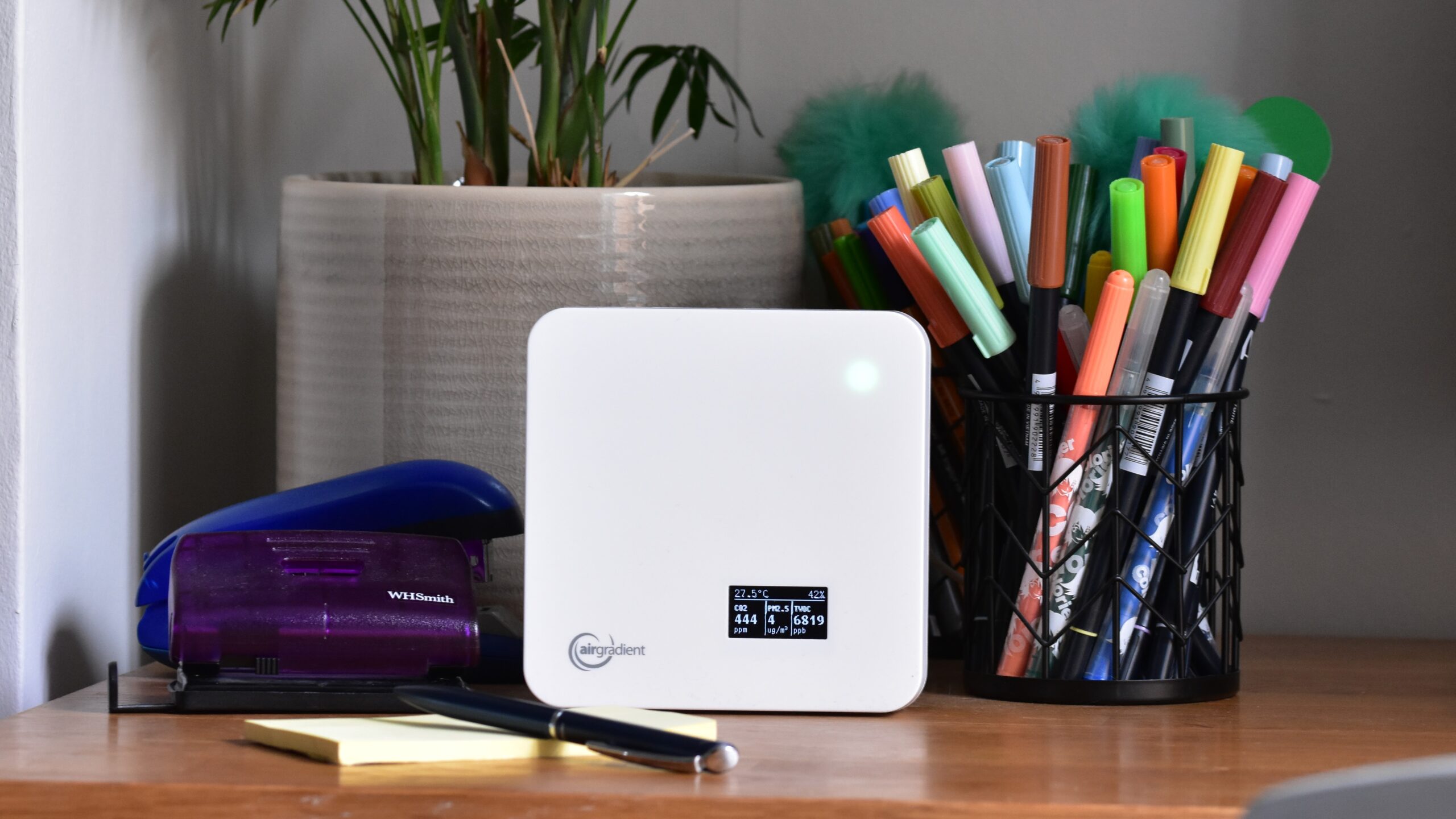
Our longstanding work on air quality is now largely focused on indoor air quality in the UK. The SAMHE project established a school-based network of air quality monitors, with pupils and teachers involved in co-designing and testing elements of the project and contributing contextual data. Our current work through CHILI aims to understand how adapting school buildings for energy efficiency changes the indoor environment and affects children’s health and education.
We have enabled over 1300 schools across the UK to monitor and understand their indoor air quality and contribute to scientific understanding of air quality in schools.
Photo: SAMHE project
The themes of environmental and social justice run through much of our work, whether we are working directly with citizen science or not. Alison Dyke has supported local people to participate effectively in decision-making (Water Beyond Boundaries), studied how legislation on nature’s rights legislation is being implemented and is currently using citizen science to support greater racial diversity in the UK environmental science workforce (CAREERS).
Luke Gooding’s work fosters community-driven climate action for a sustainable digital society. He has brought together people involved in community energy projects and academic researchers to improve understanding of how these projects are governed.
We have brought together people involved in community energy projects and academic researchers to improve understanding of how these projects are governed.
Photo: 10’000 Hours / Getty Images.
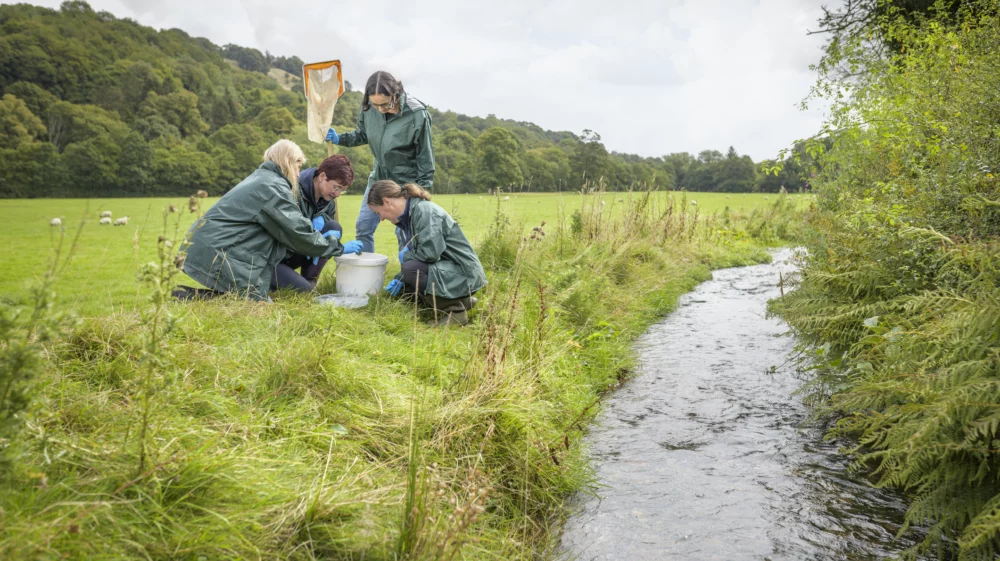
We are also involved in research across a range of other areas, including aquatic environments, environmental education and youth mental health. Most of our work is done in partnership with other research institutions, governmental agencies and community-based groups.
Alongside work on specific environmental issues, we continue to research best practice in citizen science and inclusive engagement for environmental sustainability. We use these findings to improve our own work, and they are widely used by others to guide the design of citizen science projects so they are more inclusive and rewarding for participants. In 2025, we formally named the group “Inclusive Citizen Science”.
A significant shift in our practice has been the adoption of a theory of change for the group, and for many individual projects, to guide our work. This approach helps us map how our research activities contribute to longer-term impacts, which often occur after a project has finished. The impact we are aiming for is “social and environmental improvement through citizen science theory and practice research that is inclusive, ethical, sensitive to existing power dynamics, and that equally centres both research and citizens”. This guides the projects we design, the opportunities we take on and approaches we use.
In April 2026, we launched Citizen Science UK — a resource hub for CS researchers and practitioners in the UK. This is a place to learn more about citizen science, explore best practices and connect with others doing similar work.

We have lots of exciting plans for the next few years. As well as ongoing project work, we are writing a “how-to” book on citizen science, to be published in 2027; developing new collaborations between French and English institutions to reshape how citizen science is used to foster connections with nature; and setting up drop in clinics for colleagues across SEI and the University of York to share expertise.
A timeline of work done by Inclusive Citizen Science since its inception.
Image: Inclusive Citizen Science
Discover our current citizen science projects, findings and reflections, and meet our experts.
Feature / Use the hub to learn more about citizen science, connect with others using and developing methods, and discover resources, training and events.
Feature / Learn how citizen science methodologies can be valuable at different stages of the research process, and the benefits (and costs) of different approaches.
Feature / Smriti Safaya gives us a flavour of the varied activities she gets involved in as a citizen science researcher at our York centre.