SEI’s work on artificial intelligence brings together research, tools and policy insights from across our global centres, highlighting our unique perspective on AI for environmental and societal sustainability.
Feature / SEI Scientist William Babis discusses how AI can support sustainable supply chains and its risks and opportunities for decarbonization efforts.
Perspective / AI-powered monitoring tools offer early-warning insights to policymakers and communities to conserve the wetlands of the shared Meghna River Basin.
Perspective / SEI's Stefan Bößner and Huiling Zhu discuss the implications of their work on AI-supported analysis of energy transition policies in China and Southeast Asia.
SEI podcast / Explore emerging technology solutions in sustainable development in this Currents in sustainability podcast featuring Kelly Levin and SEI experts.
Feature / Understanding global megatrends and utilizing foresight methods are crucial for planning sustainable transitions.
Media coverage / SEI's Somya Joshi speaks to CNBC about the balance between innovation, AI and sustainable resource management.
Perspective / As scientific facts become politically charged battlegrounds, this piece explores how science communication can continue to make an impact.
Feature / A recent study led by Björn-Ola Linnér and Marie Francisco explores AI’s various applications and the accompanying potential risks and benefits.
Feature / Henrik Carlsen, Fredrik Heintz and experts discuss artificial intelligence, emerging technologies and the SDGs in this film produced by Mistra Geopolitics.
Perspective / This perspective explores the issue of artificial intelligence as a tool to address climate change and as a force with the potential to affect social equity.
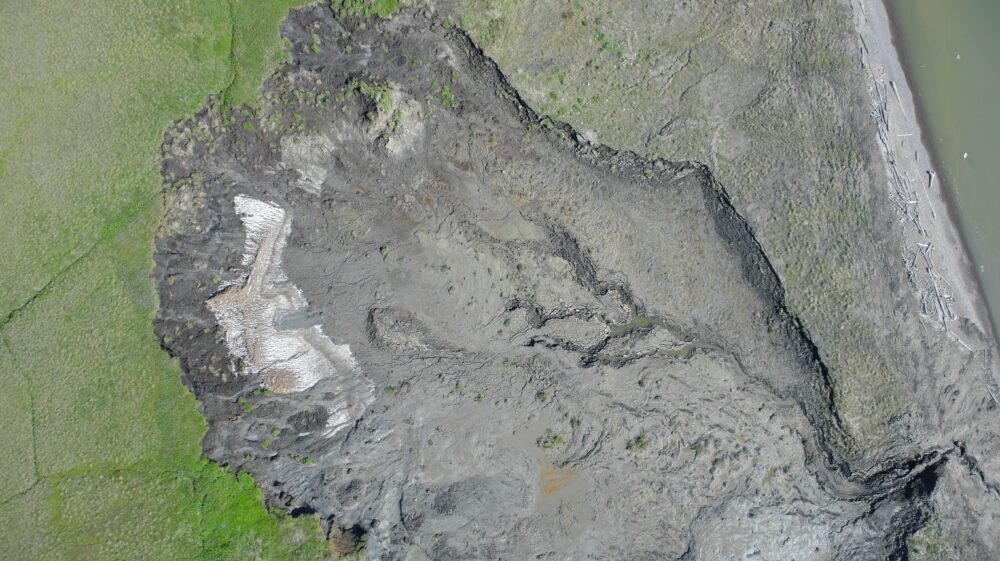
Feature / A new collaboration aims to more comprehensively explore permafrost thaw, which is essential for understanding the speed of climate change.
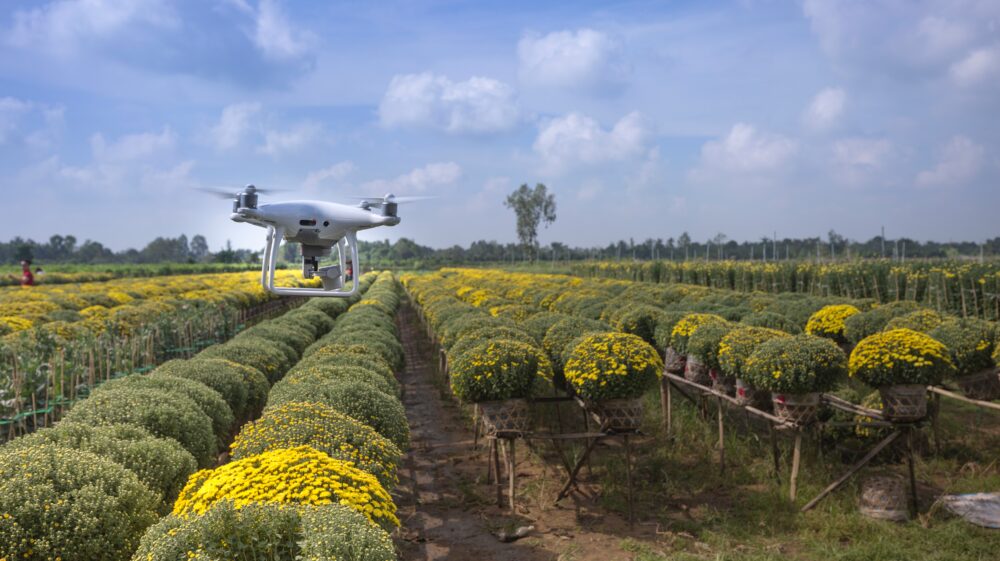
Feature / What can be done to ensure that drones, AI and other technologies make environmentally sustainable choices?
Journal article / This article examines the value of taxonomies to advance findable, accessible, interoperable, reusable (FAIR) knowledge on climate adaptation platforms.
Journal article / This paper argues AI should be governed as a global commons, with coordinated regulation across social, planetary, and safety domains.
Journal article / This position statement advocates for the responsible use of AI and automation in evidence synthesis.
Other publication / Via the lens of four scenarios, diverse governance and energy mixes show how best to prepare a secure and sustainable future.
SEI brief / A pilot study explores the promise and limitations of AI tools to deliver accurate, consistent policy analysis at scale, through the SEI AI Reader.
Perspective / AI-powered monitoring tools offer early-warning insights to policymakers and communities to conserve the wetlands of the shared Meghna River Basin.
SEI report / This report analyses how just energy transitions figure into the policies of southeast Asian countries and China.
Journal article / A large language model performed well when used for title and abstract eligibility screening of scientific articles and within a (systematic) literature review.
Journal article / Navigating a “disjoint in time” in the transformation of information via the adoption of AI requires a nuanced approach that considers the global commons.
Other publication / This Roadmap for AI Policy Research outlines key priorities for advancing research that strengthens AI governance and human-centered AI.
Other publication / The 2024 PNAI report explores AI governance, with insights from SEI’s Somya Joshi on sustainability and interoperability.
SEI brief / Get a summary of a UNEP foresight workshop, focused on future scenarios for the environment and human development in the Asia-Pacific region up to 2050.
Journal article / This perspective article examines the opportunities and risks of combined AI-EO technologies, focusing on their application in forestry.
Other publication / The Navigating New Horizons 2024 report by UNEP and ISC identifies and assesses 18 signals of change and potential disruptions on the horizon.
Journal article / The authors examine the potential of AI to accelerate and improve evidence synthesis in conservation.
Journal article / The development of artificial intelligence has likely reached an inflection point, with implications for research in climate scenarios.
Journal article / The world should redouble its efforts on the SDGs, not abandon them. Here’s how to accomplish the UN’s agenda by 2050.
Journal article / Despite growing interest in and deployment of AI technologies in domains critical for sustainability, few researchers have explored the possible systemic risks.
Other publication / The report discusses the adoption of AI for water-related sustainable development.
Other publication / Environmental governance of supply chains is growing in importance and can be improved by new global frameworks, better working conditions and digitalization.
Tool / A sophisticated Machine Learning tool, designed to act as your ally in assessing the alignment of projects, policies, and actions with the SDGs and more.
Tool / Trase enables governments, companies and others to address the environmental impacts of supply chains.
Project / This project develops a tool for AI-powered text analysis to be tested in systematic evidence synthesis reviews of research and policy papers.
Project / Using innovative technologies we are investigating new methods to measure and monitor soil organic carbon stocks quickly and at scale.
Tool / The Climate Connectivity Hub a search-and-discovery tool on disaster risk reduction, climate change adaptation, and climate change mitigation.
Project / The FAIR2Adapt project seeks to improve the accessibility and interoperability of data needed to inform climate change adaptation efforts.
Artificial intelligence (AI) presents tremendous opportunities to enhance SEI’s mission. At the same time, it introduces significant and novel risks to our organization, as well as to our research and engagement activities.
As a data-driven organization, we recognize that advancements in AI can unlock exciting new possibilities for optimization and efficiency. However, without proper due diligence, the use of AI can compromize the quality of our work, spread misinformation and erode trust.
To address these challenges and opportunities, SEI has established an AI taskforce. This group is tasked with continuously monitoring developments in the field, developing new approaches, and advising the organization on best practices for the ethical and responsible use of AI.
We have also developed internal guidance – maintained as a living document – that outlines how SEI colleagues should and should not use AI across areas such as data collection and management, publications, HR and communications. We continue to learn from others and are happy to share this guidance upon request.