Editor’s choice
Growing evidence demonstrates that climate action necessitates a transition addressing all dimensions of sustainability. The need to address distributional impacts and inequality emerges as a critical requirement for climate action, and vice versa. This program aims to advance policy coherence research by focusing on the causes of policy incoherence and how it affects achievement of global climate and development goals, especially ambitious climate action and reducing inequality.
Photo: Elena Taeza / EyeEm / Getty.
2019–2024
As the 2030 Agenda for Sustainable Development approaches the halfway mark, no country is on track to achieve the Sustainable Development Goals (SDGs). Importantly, countries are falling particularly short in efforts to reduce inequality (SDG 10). Instead, inequality is widening both within and between countries.
Similarly, progress to achieve the the Paris Agreement goals is not on track, as countries’ climate action plans (Nationally Determined Contributions, or NDCs) fall well short of the required commitments to reduce greenhouse gas emissions and increase climate resilience. The lack of collective progress raises questions not only about political will and ambition, but also how to enable fair and effective implementation going forward. Meanwhile, clear and increasing evidence shows that successful climate action needs to address all dimensions of sustainable development, and vice versa.
One important mechanism for effective implementation of the Paris Agreement and the 2030 Agenda is policy coherence – policymaking that encompasses multiple goals to increase synergy and reduce conflicts.
Our research so far confirms that potential goal conflicts or untapped synergies exist between climate action and sustainable development, which tends to lead to unequal outcomes. To date, ambitions to improve policy coherence at a rhetorical level have not translated into strategies and practices that advance climate goals and the SDGs without exacerbating inequality.
The core objective of this programme is to explore the causes and consequences of policy incoherence at the global, regional, national and sub-national levels with a specific focus on reducing inequality, and to what extent efforts that strive towards greater policy coherence lead to more or less inequality.
Particularly important is the national level, where the project aims to demonstrate examples of how countries can improve synergies between climate change and sustainable development, as well as how to tackle often unavoidable trade-offs, while leaving no one behind.
This programme includes a comparative study (ClimEQ) of nine country cases: Australia, Fiji, Colombia, Sweden, Germany, Kenya, Philippines, South Africa and Sri Lanka. We will also update the NDC-SDG Connections tool to visualize synergies between climate action and the Sustainable Development Goals to aid decision-makers implementing the Paris Agreement and the 2030 Agenda at different levels.
Overall, we intend to provide critical insights and policy recommendations to inform the achievement of the SDGs and any post-2030 goals. In addition, we will provide recommendations for how countries’ climate policies can enable progress on both climate action and the SDGs without exacerbating inequality.
After seven years of research across nine countries, the ClimEQ and Climate-SDGs projects reached a clear conclusion: aligning climate action with sustainable development is not primarily a technical problem. It is a political one.
This synthesis brief sets out what the projects found, how they assessed coherence between the Paris Agreement and the 2030 Agenda, and what the results mean for the architecture that comes after 2030.
SEI brief / What have seven years of research revealed about aligning climate action and sustainable development?
19 May 2026 / About Climate policy, Public policy and Sustainable Development Goals
Research findings have only the impact their audiences allow them to have. ClimEQ has deliberately invested in taking its evidence to the decision-makers who design and implement the Paris Agreement and the 2030 Agenda, with a policy engagement footprint that spans the institutional architecture of both.
The project convened or co-organized four side events across UN Climate Change Conferences of the Parties, alongside two events at the UN High-Level Political Forum in New York. The HLPF engagement was anchored by Science Day 2023, which SEI co-organized with UNDP, the International Science Council, SDSN and UN DESA to bring scientists and policymakers together around SDG acceleration
A dedicated training program on climate and SDG interactions extended that engagement from convening to structured capacity-building, through two editions of the UNOSD Executive Training Course in Incheon. The May 2024 edition welcomed twenty Member States to integrated-planning training co-delivered by SEI, IGES, the NDC Partnership and UN regional commissions. The 2025 successor, authored by SEI, deepened national capacity on finance, data and stakeholder engagement for NDC 3.0 and closed with country Call-to-Action plans.
Through the UN Expert Group on Climate and SDG Synergy, a thematic report on policies that support both climate and SDG action was written by Adis Dzebo on behalf of the Expert Group (Nilsson et al., 2024) and delivered to UN DESA and UNFCCC.
A further stream of engagement extends the argument across all three Rio Conventions. A 2025 academic submission to the Convention on Biological Diversity brought ClimEQ’s political reading of coherence into CBD negotiations – mapping trade-offs between the energy transition and biodiversity, defending high-integrity nature-based solutions, and arguing for a formal Joint Work Programme across the three conventions. Two further publications make the case for stronger integration between climate change, biodiversity and land use (UNEP 2025; BfN et al. 2025).
ClimEQ’s empirically grounded conclusion is that implementing the two global agendas – on which a sustainable, equal and resilient future depends – is not a technocratic exercise. It is a political project about who wins, who loses, and who gets to decide. ClimEQ’s lasting contribution is to put that question, with evidence behind it, at the centre of the conversation on what comes after 2030.
Feature / Zoha Shawoo shares insights from a workshop to increase policy coherence in Sri Lanka's agriculture sector while reducing inequalities.
26 July 2023 / About Climate policy and Sustainable Development Goals
Feature / Insights from the ClimEQ project's "Policy Coherence for Sustainable Development" workshop for Fiji's tourism and agriculture sectors.
15 May 2023 / About Climate policy and Sustainable Development Goals
Perspective / SEI US Associate Scientist Zoha Shawoo outlines why countries must strengthen policy coherence when implementing climate goals.
22 February 2022 / About Adaptation, Bioeconomy, Business, Climate policy, Mitigation, Public policy, Renewables and Sustainable Development Goals
Perspective / The disconnect between global climate and sustainable development agendas is often reflected in policy incoherence at the national level fostering inequality.
2 December 2019 / About Climate policy and Sustainable Development Goals
Press release / New findings: synergies between the Paris Agreement and Agenda 2030
29 January 2018
This synthesis webinar brought together project researchers and external experts to present key findings from five years of work on policy coherence for sustainable development. Drawing on case studies from nine countries, speakers explored the political drivers of coherence, its consequences for inequality and what the findings mean for shaping a post-2030 agenda.
To view this content, please enable experience cookies for videos, podcasts and other media.
Visit our cookie policy to learn more and update your preferences.
Past event / This event highlighted how policy incoherence between the Paris Agreement and the 2030 Agenda at the national level exacerbates inequalities.
09 July 2020 / About Climate policy, Public policy and Sustainable Development Goals
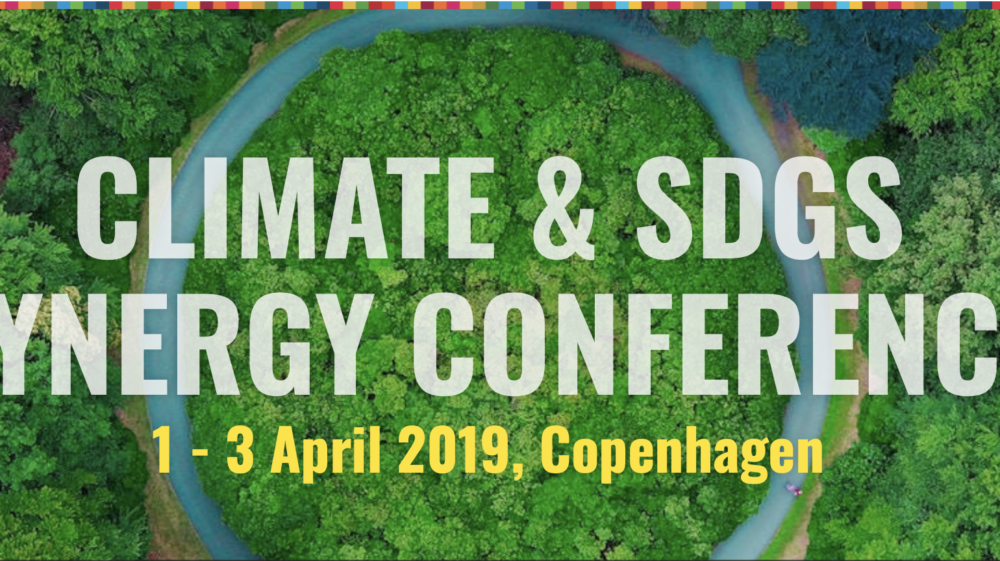
Past event / SEI is set to present tools for easily making connections between climate action and other SDGs, enabling coherent policy-making towards both goals.
01 April 2019 / About Climate policy and Sustainable Development Goals
Tool / Analyse and compare how climate actions correspond to the Sustainable Development Goals (SDGs)
In addition to core partners, local partners from the case study countries are also involved in co-leading the national case study work. These include:
Past event / SEI's Katy Harris will discuss scientific findings and research needs in the 15th SBSTA Research Dialogue to support UNFCCC and Paris Agreement.
08 June 2023 / About Climate policy and Sustainable Development Goals
Past event / The workshop brings together stakeholders involved in the energy, climate, poverty and inequality reduction sectors to discuss research findings and co-create.
07 June 2023 / About Energy access and Renewables
Past event / Adis Dzebo will participate in a panel discussion on Climate and SDG Synergies at one of the United Nations Climate Change Conference's side event

12 June 2023 / About Climate policy and Sustainable Development Goals