The Climate Systems and Energy Policy Unit focuses on addressing climate change through a holistic approach. We seek to understand the underlying causes, parameters and effects of climate change at global, national, regional and local levels and find the best policy options to mitigate climate change as well as adapt to it. We have a long experience of analyzing climate and energy systems and offering policy guidance related to both fields. By bridging these realms, our unit is uniquely positioned to offer comprehensive insights that inform evidence-based policies and allow for a balanced approach between energy sustainability and climate resilience.
The Climate Systems and Energy Policy Unit’s projects and research are divided between two research groups
The group’s mission is to advance the global transition towards a low-carbon future. We look at the energy system as a whole analyzing different technologies, regulatory frameworks, and international collaborations, providing comprehensive insights to guide policymakers, industry leaders, and communities.
By studying advanced technologies, innovative processes, and novel energy sources, we aim to support the decarbonization of energy systems and industrial processes. We focus on the way energy is produced, distributed, and consumed. Our team investigates the integration of renewable energy, energy storage solutions, and enhanced efficiency measures to reduce carbon footprints across various sectors, fostering a sustainable and resilient energy infrastructure. We have a strong background in modelling energy systems and giving policy recommendations to Estonia and other countries.
Project / H2-SEAS project designs, builds and tests a novel, fully-integrated hydrogen-electric fishing vessel to accelerate a sustainable and accessible transition.
Project / The study will analyse the future use of alternative gases in Estonia and the possible contribution of the joint gas market towards its decarbonisation.
Initiative / The Gridless Solutions Initiative explores alternative technologies for the delivery of critical services like energy, sanitation and freshwater.
Project / The UA-GRIDEX project aims to enhance Ukraine’s energy resilience in light of the military attacks targeting Ukraine’s energy infrastructure.
Project / The objective of this study is to identify possible scenarios that would help to achieve a carbon neutral heating and cooling sector in Estonia by 2050.
Project / This study will propose and analyse reforms in Estonia that will enable the country to achieve climate-neutral electricity production by 2050.
In our commitment to combat climate change, we concentrate on understanding, quantifying, and mitigating greenhouse gas emissions and supporting emission reductions through a comprehensive approach to green transition policy development. Through comprehensive analysis and understanding geopolitics and material flows, our research group develops strategies to limit the impact of climate change. By identifying key drivers and implementing targeted mitigation measures, we aim to contribute to the global effort to achieve climate goals, ensuring a healthier planet for current and future generations.
Project / Green Agenda supports Armenia, Moldova and Ukraine in their efforts to achieve climate neutrality through green transition.
Project / This project supports Albania’s EU accession by assessing readiness to align with and implement EU acquis under Chapter 27 on Environment and Climate Change.
Project / The green reform indicators project proposes relevant indicators for Estonia to assess the state of its green transition.
Project / Mobilising, harmonising and incentivising forest biodiversity and environmental monitoring data through Web 3.0 technology.
The group´s mission is to improve transparency and communication of weather risks, climate change and their impacts – and support weather and climate risk reduction and adaptation policy on all spatial scales.
We make weather and climate information delivery more accessible to a broader audience, by explaining the complexities surrounding climate change in a clear, yet more intuitive manner, fostering a better understanding of the challenges we face.
Project / Regions4Climate will implement innovative actions to enhance climate resilience within the real-life environments of partner regions.
Project / Adaptation AGORA will support the adaptation to climate change by leveraging and step-forwarding best practices, innovative approaches and policy instruments.
Project / This project investigates the feasibility of developing a radar climatology in the Baltic Sea region.
Project / ClimVis aims to prepare a tailored implementation concept of a transnational, multilinguistic visualisation tool of observed and projected climate information.
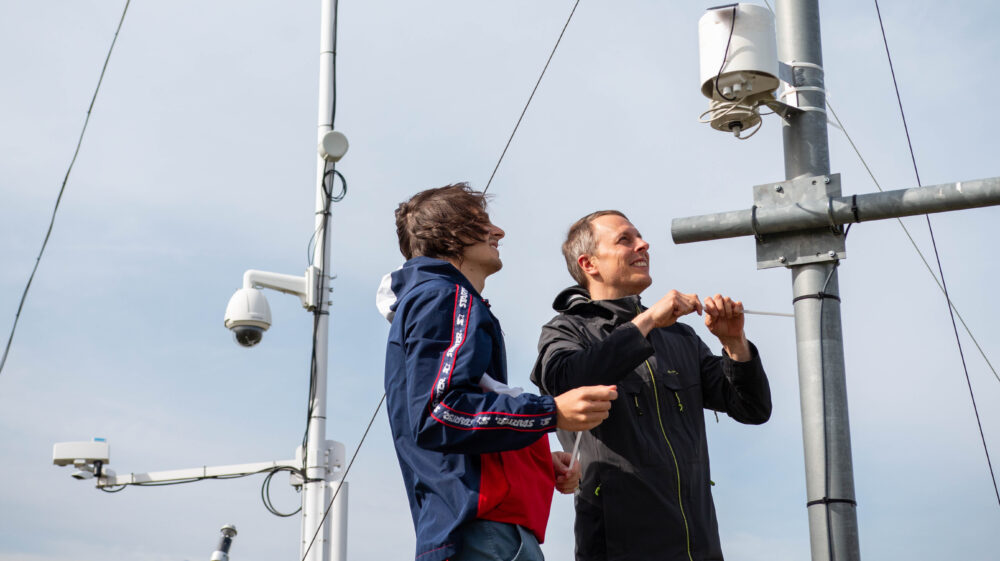
We advance the understanding of urban weather and climate conditions by establishing microscale urban meteorological networks for real-time data insights. By utilizing new data sources, we not only illuminate the complex dynamics of urban environments, but also lay the foundation for more tailored outreach activities and informed decision-making in urban planning and climate resilience strategies.
Project / Regions4Climate will implement innovative actions to enhance climate resilience within the real-life environments of partner regions.
Project / B.Green aims at improving urban planning by developing a tested new green infrastructure planning concept into the pre-planning process in Helsinki and Tallinn.
We work with multiple challenges that have their origins in human activities like water regime changes due to climate and land-cover change, and water pollution. Currently in focus are aspects related to the restoration of aquatic ecosystems and development of water treatment technologies with the aim to use and reuse water. Our goal is to ensure the responsible and adaptive use of water resources in the face of evolving climate dynamics.
Project / The NURSECOAST-II project aims to better adapt wastewater treatment systems to a high seasonality in tourist spots and improve the status of the Baltic Sea.
Project / The BioFloat project tests the concept of floating islands in three lakes in Estonia and Latvia to preserve biodiversity and restore water ecosystems.
Project / The project TRUST ALUM helps public authorities in the Baltic countries make better use of ALUM water treatment and improve water quality in lakes.
Working together with stakeholders we develop adaptive frameworks that address the evolving challenges posed by climate change. By offering strategic guidance, we aim to contribute to the formulation of effective policies that enhance resilience and sustainability in the face of changing environmental conditions.
Project / Regions4Climate will implement innovative actions to enhance climate resilience within the real-life environments of partner regions.
Project / Adaptation AGORA will support the adaptation to climate change by leveraging and step-forwarding best practices, innovative approaches and policy instruments.
Project / This project aims to compile a best-practices document that builds on the successes of meteorological agencies in the transition to impact-based warning.
505 results / 14 of 43 pages
Journal article / This article explores the challenges and lessons of implementing public participation in (strategic) environmental impact assessments within the EU.
Media coverage / New weather measurements by SEI Tallinn from this summer alone support the need for increasing greenery in the capital of Estonia.
Project / ChemClimCircle will address the linkage between chemicals, climate and circularity issues in public procurement.
Past event / Given the turbulent times and global challenges, SEI Tallinn's 30th anniversary celebration focused on building resilience through sustainability.
SEI brief / This policy brief finds that while Estonia and Poland have set goals to grow green public procurement, few mandates exist to make them happen.
Feature / How did Estonia use Covid-19 recovery packages to accelerate the clean energy transition? Insights generated from the Energy Policy Tracker.
Perspective / Bosnia and Herzegovina Environmental Strategy and Action Plan (BiH ESAP) development shows that public participation in environmental policy is crucial.
Press release / A Virtual and Augmented Reality Trainers Toolbox helps foster low-carbon tourism with the participation of SEI Tallinn.
Feature / Find out what SEI is doing to protect #TheAirWeShare.
SEI brief / Green choices in public procurement can help EU Member States reach their climate goals. This brief compares the policies of Sweden and the Netherlands.
Other publication / The aim of the handbook is to guide urban planners and other stakeholders interested in promoting green infrastructure planning
Project / This project aims to compile a best-practices document that builds on the successes of meteorological agencies in the transition to impact-based warning.