SEI Tallinn’s Sustainable Cities and Resilient Communities Unit supports stakeholders in understanding, creating and measuring sustainable and good quality of life – from Estonia and the European Union to the EU’s Eastern Partnership countries and Asia.
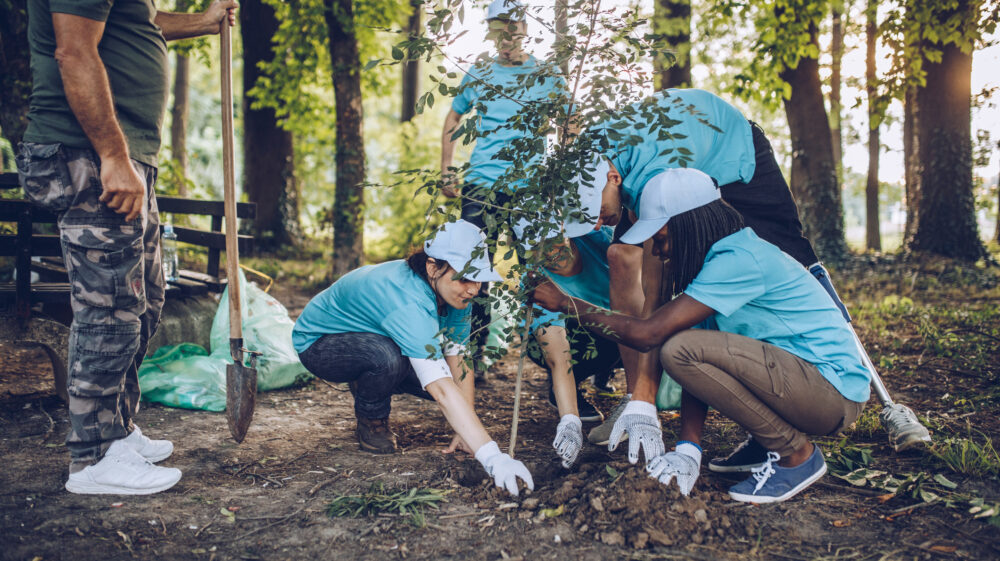
A community garden is an excellent pathway to a greener living environment, resilience in nourishment and strengthening the community.
Head of Unit, Senior Expert (Sustainable Cities and Resilient Communities Unit)
SEI Tallinn
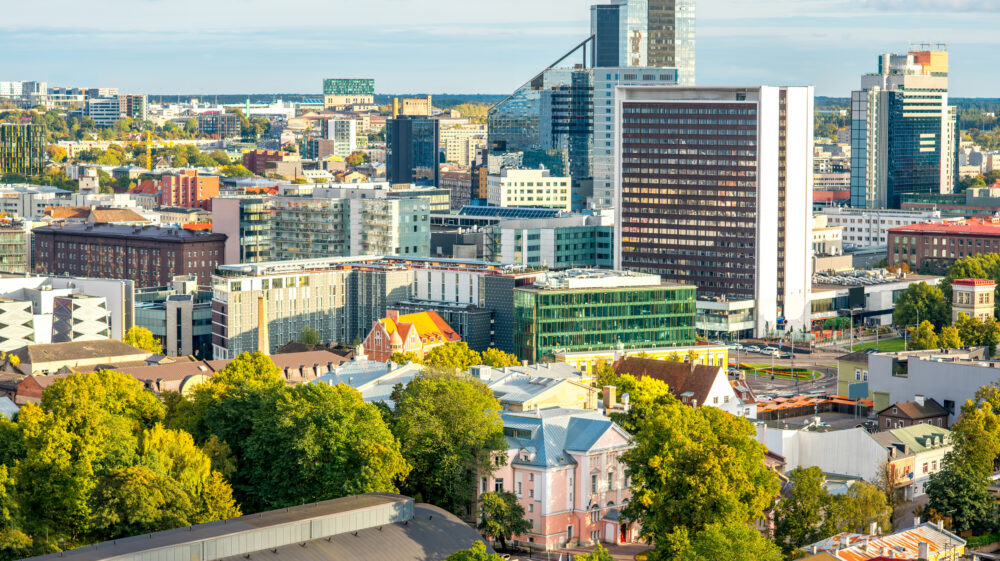
SEI Tallinn experts analyse sustainable and high quality spatial development and provide advice on the subject to both national and local authorities. For example, our experts are developing metrics and tools for spatial planning in Estonia, analysing the impact of innovative spatial interventions in the city of Tallinn and contributing to the development of sustainable and high quality living environment policies for Estonia.
Project / This project aims to create a spatial planning development strategy and an action plan as well as put in place institutional arrangements in Estonia.
Project / SEI Tallinn, together with partners, created a toolbox for designing sustainable and high-quality living environment in Estonia.
Project / Project Rohejälg (Green Trace) zooms in on three spatial interventions in Tallinn City in 2023.
Project / 15-minute cities propose urban redesigns aiming to cut carbon emissions and improve quality of life.
Project / Programmi "Ohutu koolitee" eesmärk on muuta turvalisemaks Tallinna koolide ümbrused, innustamaks lapsi liikuma jala, rattaga või ühistranspordiga.
Project / Vanalinna liikuvusuuringu eesmärk on parandada Tallinna vanalinna liikuvuskeskkonda, arvestades piirkonna kultuurilist ja ajaloolist olulisust.
SEI Tallinn analyses and supports environmental policy choices in Estonia, the European Union and beyond. For example, SEI Tallinn experts advise the European Environment Agency on various sustainable development issues, conduct a thorough analysis of the long-term climate strategies of European countries and prepare a comprehensive overview of the planetary boundaries framework, how it is addressed globally and how the concept can be applied in Estonia.
Project / SEI Tallinn's report summarizes the concept of planetary boundaries and looks into its applicability in Estonia.
Project / A consortium of thirteen European organisations supports the European Environment Agency in sustainability transitions.
Project / Achieving EU climate neutrality in the next 30 years is a great societal, economic and political undertaking, with many challenges and opportunities.
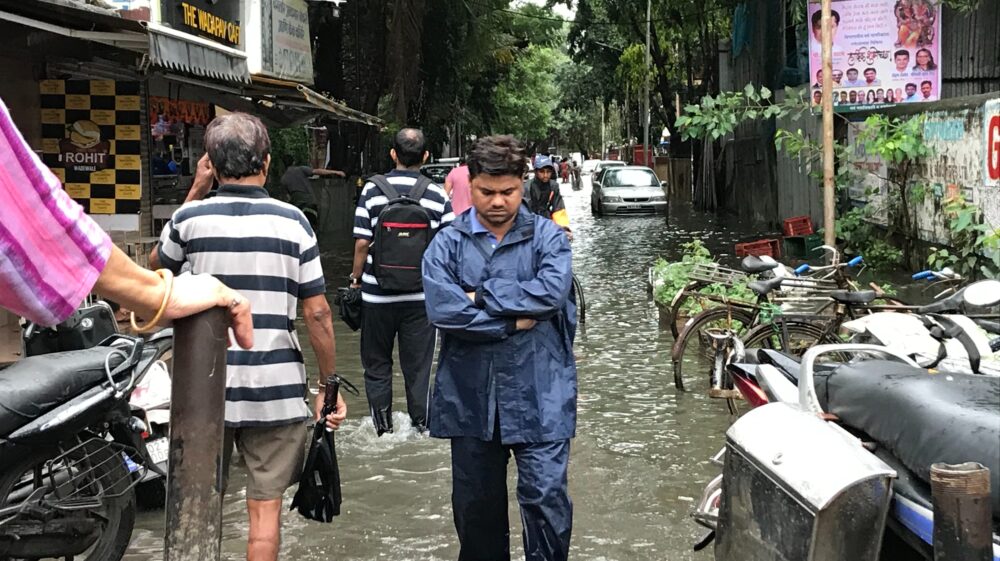
Social inclusion and just transition are at the heart of the Paris Agreement and the European Green Deal, which aim to support smart policy decisions and reforms so that no people, sector or region in society should suffer in the transition to a carbon-neutral economy. SEI Tallinn is working on just transition projects at the EU level, advising the European Environment Agency's expert group on the just transition, as well as supporting the EU's Eastern Partnership countries Georgia, Ukraine, Moldova and Armenia in the preparation of their green transition plans.
Project / Green Agenda supports Armenia, Moldova and Ukraine in their efforts to achieve climate neutrality through green transition.
Project / Regions4Climate will implement innovative actions to enhance climate resilience within the real-life environments of partner regions.
Project / A consortium of thirteen European organisations supports the European Environment Agency in sustainability transitions.
In Estonia, the transition to a climate-neutral and sustainable economy will increasingly require a workforce that understands the complex interlinkages between environmental and societal challenges. SEI Tallinn is working on a number of projects to help people, especially youth, to acquire green skills and enter green jobs. Often this helps to tackle another societal problem at the same time, such as tackling marginalisation or helping young people who are not in work or education back into the labour market.
Project / Project OSCAR supports the sustainable use and disposal of electrical and electronic equipment among young people.
Project / YENSESIS addresses the challenge of unemployment for young people that are Not in Education, Employment or Training (NEET) in islands.
505 results / 15 of 43 pages
Project / This project investigates the feasibility of developing a radar climatology in the Baltic Sea region.
Feature / To reduce the unemployment of young NEETs and enable sustainable development, it is crucial to create green jobs on islands in the EU.
SEI report / This study analyses progress made towards reaching climate neutrality in Estonia.
SEI brief / This brief highlights SEI's efforts to provide low- and middle-income countries with tools and training needed to integrate climate and development planning.
Feature / Watch the short film to get a glimpse of Bosnia and Herzegovina's stunning scenery and natural treasures worth protecting.
Feature / On World Environment Day 2022, SEI researchers explain how our lifestyles are connected to environmental crises and share their sustainable lifestyles actions.
SEI brief / SEI Tallinn conducted the study of food waste loss in Estonia's food supply chain. About 167 000 tonnes of food waste are generated in Estonia each year.
SEI brief / This SEI discussion brief outlines principles for designing and implementing nature-based solutions that are just and equitable.
Perspective / SEI researchers share their reflections on the latest Global Assessment Report on Disaster Risk Reduction, launched ahead of the 2022 Global Platform for DRR.
Feature / Find SEI events, research and perspectives related to Stockholm+50, held on 2-3 June 2022 in Stockholm, Sweden.
SEI report / An independent report ahead of the Stockholm+50 international meeting captures the perspectives of youth for actions now for a better future.
Media advisory / What do more than 900 youth across 89 countries envision when they think about the future? SEI partnered with Indian think tank CEEW to publish a youth report.