Photo: Oliver Johnson / SEI.
SEI supports countries in developing and implementing stronger, more integrated national climate plans under the Paris Agreement – helping translate ambition into evidence-based, actionable strategies for a resilient, low-carbon future.
Leveraging advanced modeling tools, systems analysis, and participatory policy processes, SEI helps countries design integrated climate and development plans that align climate action and sustainable development. Misalignment between climate and development policies remains a widespread challenge; SEI works at the nexus of these issues, supporting governments to identify trade-offs, capture synergies, and ensure coordination across sectors.
Through its Initiative on Integrated Climate and Development Planning, SEI supports low- and middle-income countries in linking their NDCs with the Sustainable Development Goals. Using tools such as LEAP, NEMO, WEAP, and AMES, SEI conducts integrated assessments that link mitigation, adaptation, and economic outcomes, providing governments with a solid evidence base for decision-making. SEI’s NDC-SDG Connections tool enhances transparency and comparability among countries’ commitments, and its experts have drawn lessons from global NDC experience to inform best practices.
With the third cycle of NDC submissions in 2025, countries are expected to increase their ambition, though ambition alone is not enough. To effectively limit global warming to 1.5°C above pre-industrial levels, NDCs must also be coherent, actionable, and implementable.
Tool / Analyse and compare how climate actions correspond to the Sustainable Development Goals (SDGs)
Tool / The Low Emissions Analysis Platform (LEAP) is a powerful, versatile system for energy planning and climate change mitigation assessment.
Tool / The Next Energy Modeling system for Optimization (NEMO) is a high-performance, open-source optimization tool designed to answer energy policy questions.
Tool / AMES is a macroeconomic simulation model designed to extend resource planning models. It is closely integrated to SEI’s Low Emissions Analysis Platform.
Tool / The Water Evaluation and Adaptation Planning tool (WEAP) provides a comprehensive and user-friendly framework for policy analysis in water resources planning.
Initiative / This initiative enables integrated national planning for Nationally Determined Contributions and Sustainable Development Goals.
Project / SEI used its flagship tools and expertise to support Kazakhstan in developing its third nationally determined contribution under the Paris Agreement.
SEI brief / A new analysis looks at six countries and identifies the synergies and conflicts between nationally determined contributions and Sustainable Development Goals.
Project / SEI used its flagship tools and expertise to support Kazakhstan in developing its third nationally determined contribution under the Paris Agreement.
SEI report / Integrating sanitation considerations into national climate policies is not just necessary but urgent, as is integrating climate into sanitation frameworks.
Journal article / The editorial to a special issue of the journal Climate Policy: Making Climate Action More Effective: Lessons Learned from the First NDCs.
Other publication / Cooperation in the water-energy-food-ecosystems nexus among countries sharing the Syr Darya River Basin can improve local livelihoods.
Perspective / The disconnect between global climate and sustainable development agendas is often reflected in policy incoherence at the national level fostering inequality.
Perspective / National climate action plans are often framed narrowly and may overlook important aspects of climate change and development.
Past event / Join SEI’s global event series uniting science and action for integrated biodiversity and climate solutions across four continents.
Perspective / To go beyond ambition and enhance the effectiveness of NDCs, countries need to improve the transparency, coherence and implementability of NDCs.
Feature / A special issue of Climate Policy edited by SEI’s Richard Klein and Pieter Pauw identified three dimensions of making NDCs more effective.
Journal article / This study evaluates the inclusion of SLCP and air pollutant mitigation within NDCs that were submitted between 2015 and 2022.
Journal article / In this journal article, researchers from SEI York discuss climate change mitigation and sustainable development planning in Nigeria.
Other publication / African leaders can act quickly across five key areas to fight climate change, prevent air pollution, and protect human health.
SEI brief / This brief highlights SEI's efforts to provide low- and middle-income countries with tools and training needed to integrate climate and development planning.
Journal article / This paper examines how actions in Zimbabwe's Nationally Determined Contribution (NDC) can achieve both enhanced emissions reductions and development benefits.
Perspective / The disconnect between global climate and sustainable development agendas is often reflected in policy incoherence at the national level fostering inequality.
Perspective / National climate action plans are often framed narrowly and may overlook important aspects of climate change and development.
Past event / Join SEI’s global event series uniting science and action for integrated biodiversity and climate solutions across four continents.
Perspective / To go beyond ambition and enhance the effectiveness of NDCs, countries need to improve the transparency, coherence and implementability of NDCs.
Feature / A special issue of Climate Policy edited by SEI’s Richard Klein and Pieter Pauw identified three dimensions of making NDCs more effective.
Past event / Join SEI’s global event series uniting science and action for integrated biodiversity and climate solutions across four continents.
SEI supports governments in developing integrated, economy-wide greenhouse gas (GHG) emissions mitigation strategies. Using SEI’s flagship tools – the Low Emissions Analysis Platform (LEAP) and the Next Energy Modeling system for Optimization (NEMO) – SEI helps countries build customized emissions models covering energy, transport, industry, buildings, waste, agriculture, forestry, and other land uses.
These models enable governments to assess emissions trajectories, costs, financing needs, and abatement potential under various scenarios, from business-as-usual to ambitious decarbonization pathways. By combining quantitative analysis with participatory policy engagement, SEI ensures that mitigation options are technically sound, nationally relevant, and aligned with social and development priorities.
Tool / The Low Emissions Analysis Platform (LEAP) is a powerful, versatile system for energy planning and climate change mitigation assessment.
Tool / The Next Energy Modeling system for Optimization (NEMO) is a high-performance, open-source optimization tool designed to answer energy policy questions.
Project / SEI used its flagship tools and expertise to support Kazakhstan in developing its third nationally determined contribution under the Paris Agreement.
Project / SEI is working to develop a ready-to-use modeling framework to examine which set of measures ASEAN countries may take to reach their net-zero goals.
Feature / Morocco’s 2050 net-zero strategy, supported by SEI, aims to boost GDP, create jobs, and achieve significant environmental and economic benefits.
Feature / Côte d'Ivoire's updated Nationally Determined Contribution aims to reduce air pollution to benefit citizens' health and reduce global greenhouse gas emissions.
Feature / Jason Veysey explains how SEI and Morocco created the country's ambitious, long-term, low-emissions development plan, highlighting lessons for other countries.
Journal article / LEAP-IBC is a tool to develop integrated strategies to improve air quality, human health and mitigate climate change.
Journal article / This paper examines how actions in Zimbabwe's Nationally Determined Contribution (NDC) can achieve both enhanced emissions reductions and development benefits.
SEI brief / This brief highlights SEI's efforts to provide low- and middle-income countries with tools and training needed to integrate climate and development planning.
Other publication / African leaders can act quickly across five key areas to fight climate change, prevent air pollution, and protect human health.
Adaptation to climate change is a core focus of SEI’s research and engagement. SEI supports countries in strengthening climate resilience and adaptive capacity through integrated analysis of climate risks, vulnerabilities, and response options.
SEI’s work covers adaptation policy and finance under the UN Framework Convention on Climate Change, vulnerability assessments, capacity building, and community-based adaptation. Drawing on literature reviews, stakeholder consultations, and participatory processes, SEI identifies priority adaptation measures across key sectors such as water, agriculture, and health, identifying gaps in financial support while also exploring the links between mitigation and adaptation outcomes. The institute’s approach emphasizes the integration of adaptation into national and sectoral strategies, and evidence-based prioritization of actions that enhance resilience for vulnerable populations and ecosystems.
Tool / weADAPT is SEI's pioneering, user-led platform and network for climate change adaptation.
Tool / The Water Evaluation and Adaptation Planning tool (WEAP) provides a comprehensive and user-friendly framework for policy analysis in water resources planning.
Project / SEI used its flagship tools and expertise to support Kazakhstan in developing its third nationally determined contribution under the Paris Agreement.
Feature / The ARA, a global collaborative effort hosted by SEI and Chulalongkorn University, has been working to ensure research serves those on the climate frontline.
Other publication / This briefing paper identifies entry points for integrating transboundary climate risks in the global goal on adaptation framework.
Other publication / Ten case studies in transboundary climate risk illuminate the blind spots for climate policymaking in this year's report.
Other publication / Transboundary climate risks remain lacking from the UNFCCC Global Stocktake (GST); actions must be taken now and for the next GST to address this gap.
Other publication / SEI researchers have contributed to the first European Climate Risk Assessment (EUCRA).
As an established thought leader on operationalizing the loss and damage fund, SEI provides technical and policy support to help governments understand, assess, and address loss and damage (L&D) associated with climate impacts. This includes assessments of economic and non-economic losses, identification of the most affected sectors and communities, and review of policy and financial mechanisms for addressing L&D.
SEI draws on emerging international frameworks, methodologies, and case studies to help countries quantify impacts, identify recovery needs, and develop strategies to access and mobilize finance for addressing residual climate risks.
Project / Vulnerable countries are already experiencing severe losses and damages from unavoidable climate change impacts. They urgently need financial support.
Project / SEI used its flagship tools and expertise to support Kazakhstan in developing its third nationally determined contribution under the Paris Agreement.
SEI podcast / Listen to episode two of SEI's Now & Then Podcast on loss and damage — what it means and how to operationalize finance to address it.
Feature / SEI Scientist and Zoha Shawoo puts the COP28 loss and damage decision into perspective, saying it is both significant and inadequate for the scale of need.
Media coverage / COP27's establishment of a Loss and Damage fund is a crucial victory. Now it must prioritize the most vulnerable communities, SEI researchers say.
Feature / SEI's Inès Bakhtaoui explains what we can expect from the first Glasgow Dialogue on Loss and Damage at the intersessional Bonn Climate Change Conference.
SEI brief / This brief analyses policy options for generating enough loss and damage revenue to meet the global need.
Other publication / This report offers recommendations on how to operationalize a new global loss and damage fund from the perspectives of intended beneficiaries.
SEI report / The authors assessed and evaluated how the first GBP 1 million of Scottish government funding was disseminated and used, with implications for L&D finance.
SEI works with governments to design just and inclusive transition strategies that ensure climate action delivers equitable social and economic outcomes. Through socioeconomic assessments, policy reviews, and capacity-building, SEI analyzes the impacts of decarbonization on workers and communities, identifies policy gaps and financing options for affected sectors, and provides recommendations for labor reskilling and regional economic diversification.
SEI’s approach promotes social inclusion, gender equality, and youth engagement by identifying targeted actions to involve vulnerable populations in decision-making and to strengthen their capacity to participate in climate action.
Our work also supports the integration of gender considerations into climate finance and policy planning, ensuring equitable access to opportunities and resources. In addition, SEI can review and provide recommendations to strengthen institutional arrangements for effective climate governance, enhancing coordination across ministries, agencies, and the private sector. Across all activities, SEI embeds cross-cutting themes – such as gender equality, just transition, and social inclusion – into mitigation and adaptation planning to advance fair and resilient low-carbon development.
Tool / This tool allows you to explore the inequalities in carbon dioxide emissions across the world, by linking emissions to income levels.
Feature / What it means to make the transition towards a low carbon economy "just", and what it takes to achieve a just transition, is a key focus of SEI's work.
Perspective / To ensure a just transition, ethnic minority groups and Indigenous Peoples need to be involved in decision-making and benefit sharing.
Feature / This story conveys SEI's fieldwork in La Guajira exploring the social acceptance of wind energy among Indigenous Wayuu communities and key challenges.
Journal article / This journal article calls for more national and sub-national evaluations of adaptation finance to determine whether money reaches the most vulnerable groups.
Other publication / The objective of this brief is to highlight the important role of adaptation action for large multinational corporations that aim to achieve a just transition.
SEI brief / This brief summarizes the dynamics and challenges of the just transition from coal in South Africa.
SEI brief / This brief presents highlights from the report, Applying the Unlocking a Better Future Framework for a Just Transition in Scotland.
SEI report / This groundbreaking report charts routes toward a just transition away from large-scale meat production and consumption in high-consuming countries.
SEI assists governments in developing climate finance strategies that align with national priorities and international best practices. This includes mapping existing finance flows across public, private, and international sources; identifying financing gaps and opportunities; and assessing suitable finance mechanisms to advance mitigation and adaptation actions.
SEI also supports countries in evaluating strategies to mobilize resources through Article 6 cooperation and international carbon markets, linking climate actions with innovative financial instruments and partnerships. By strengthening countries’ capacity to attract and manage climate finance, SEI enables them to unlock new investment opportunities for low-carbon development.
One-SEI program / Our mission is to help accelerate the allocation of capital to sustainable economic activities.
Initiative / Our work on global finance looks at how the global financial system supports or undermines societal transitions.
Project / The project will identify capacity gaps related to creating an enabling environment for inclusive finance flows, with specific attention to adaptation finance.
Project / SEI used its flagship tools and expertise to support Kazakhstan in developing its third nationally determined contribution under the Paris Agreement.
Perspective / Five years on from the Paris Agreement, it’s time to advance the goal of making all finance flows consistent with low-emission, climate resilient development.
SEI brief / This brief informs adaptation financiers, the broader community of adaptation scholars, and practitioners in their efforts to scale up support for LLA.
SEI brief / Climate finance for adaptation in Africa falls short in five ways outlined in this fact sheet based on a Climate Policy journal article.
SEI is widely recognized for helping countries integrate air quality and climate strategies, and for its expertise in quantifying associated health and air pollution co-benefits. Working with the Climate and Clean Air Coalition, SEI is supporting more than 70 countries in Africa, Asia and Latin America to identify actions that can enhance air quality, improve human health, and mitigate climate change.
Tool / The Low Emissions Analysis Platform (LEAP) is a powerful, versatile system for energy planning and climate change mitigation assessment.
Initiative / This initiative focuses on integrated analysis and planning for the mitigation of air pollution and greenhouse gases, including short-lived climate pollutants.
Feature / Kenyan government showed interest in the LEAP-IBC energy planning tool at a seminar in Nairobi.
Feature / Côte d'Ivoire's updated Nationally Determined Contribution aims to reduce air pollution to benefit citizens' health and reduce global greenhouse gas emissions.
Other publication / Chapter in Quantifying Co-Benefits in Asia: Methods and Applications’, Asian Co-benefits Partnership White Paper 2018
Other publication / African leaders can act quickly across five key areas to fight climate change, prevent air pollution, and protect human health.
Journal article / Analysis shows that Colombia's SLCP targets are well within reach thanks to careful planning and capacity building.
Journal article / LEAP-IBC is a tool to develop integrated strategies to improve air quality, human health and mitigate climate change.
SEI brief / Factsheet describing the LEAP-IBC tool and its application for assessing impact of air quality, climate change and energy policy scenarios
Journal article / This paper estimates the short-lived climate pollutant emission reductions from Costa Rica's decarbonization plan.
Journal article / Despite contributing little to climate change, Togo has identified measures to simultaneously reduce greenhouse gas emissions and improve local air quality.
Journal article / Impact reductions from SLCPs, CO2, and other air pollutants for Nepal are examined under different scenarios.
SEI brief / How SEI’s Low Emissions Analysis Platform (LEAP) and Integrated Benefits Calculator can help plan coherent emission reduction strategies with health benefits.
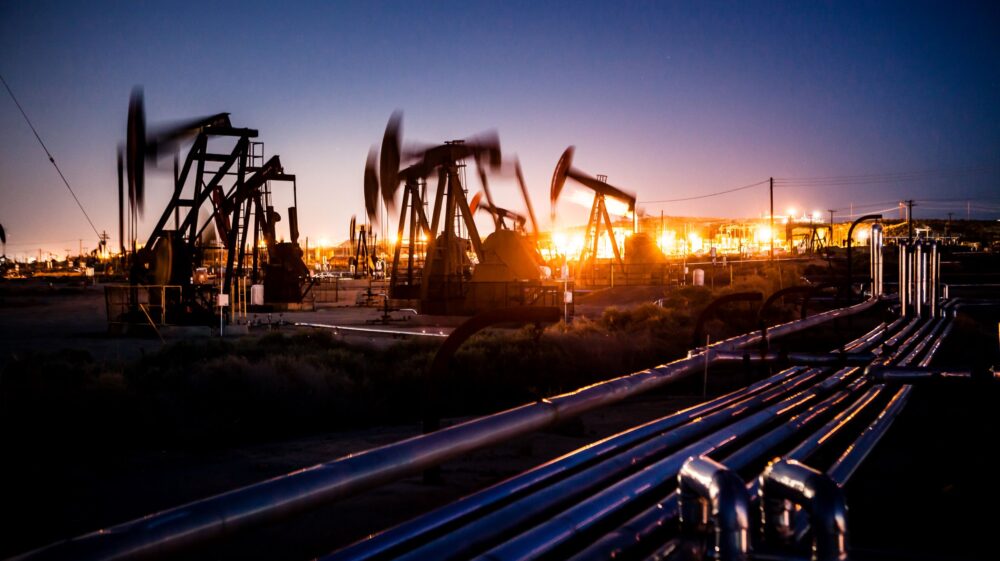
SEI’s work demonstrates specific measures that countries can take to phase out fossil fuel production, and how these can be integrated into NDCs and development strategies. It also focuses on how to manage the fossil-fuel transition equitably.
Tool / This web-based platform tracks fossil fuel infrastructure development and enables users to evaluate potential threats to ecosystems and communities.
Project / This database showcases ongoing research into Covid-19 recovery packages from a climate and energy perspective.
SEI working paper / Nationally determined contributions could help in the wind-down of oil, gas and coal production. But countries are only making limited use of this potential.
SEI report / Amid growing momentum to link fossil fuel production and climate goals, transparency on countries’ alignment with Paris goals is crucial to assessing progress.
SEI working paper / This analysis finds that a growing number of countries are addressing fossil fuels as part of their climate mitigation activities.
Journal article / This paper looks at where and how to equitably phase out oil, gas and coal production.
Journal article / This article outlines why it is important that Parties to the Paris Agreement explicitly address the phasing out of fossil fuel production under the UNFCCC.
SEI brief / This brief explains the rationale for considering fossil fuel supply under the UNFCCC Talanoa Dialogue, and highlights available policy options.
Industry is responsible for emitting 30% of global CO2 emissions, making it a crucial player in global efforts to mitigate climate change. However, so far, most NDCs lack details around how countries plan to cut emissions from industry. SEI is working to address this gap by undertaking collaborative projects with countries and industry to cut emissions in the private sector.
Tool / The Green Steel Tracker gathers public announcements on low-carbon investments in the steel industry and presents them transparently in one place.
Project / SEI provides scientific inputs and policy action advice to the World Bank Global Methane Reduction Platform for Development -CH4D
Project / The Leadership Group for Industry Transition (LeadIT) aims to enable the transition of heavy industry towards net zero carbon emissions by 2050.
Feature / Learn how LeadIT forges global partnerships to slash heavy industry emissions and innovate for a sustainable future.
Feature / An SEI analysis shows that nationally determined contributions under the Paris Agreement are short on detail when it comes to cutting emissions from industry.
Perspective / Can we avoid creating carbon dioxide as a by-product of steel? This is the aim of HYBRIT – the ambitious project to transform the steel production process.
Feature / The India-Sweden Industry Transition Partnership, launched at COP28 to accelerate the decarbonization of heavy industry, held its first meeting in April.
Press release / The Leadership Group for Industry Transition (LeadIT) has updated its Green Steel Tracker, a vital tool for monitoring and advancing low-carbon primary steel production worldwide. This latest release reveals a…
Other publication / Using case studies, this paper reviews public-private partnerships and policy mixes for industry transition on a global scale.
Other publication / This paper evaluates the financing needs and feasibility of a green hydrogen-based ironmaking project in a developing country.
Other publication / Read recommendations for shaping the COVID-19 recovery so that it supports low-carbon transitions for industry.
One-SEI program / SEI’s NDCs+ work helps countries develop ambitious, equitable and actionable next-generation climate strategies aligned with the Paris Agreement.