SEI Tallinn’s Sustainable Cities and Resilient Communities Unit supports stakeholders in understanding, creating and measuring sustainable and good quality of life – from Estonia and the European Union to the EU’s Eastern Partnership countries and Asia.
A community garden is an excellent pathway to a greener living environment, resilience in nourishment and strengthening the community.
Head of Unit, Senior Expert (Sustainable Cities and Resilient Communities Unit)
SEI Tallinn
SEI Tallinn experts analyse sustainable and high quality spatial development and provide advice on the subject to both national and local authorities. For example, our experts are developing metrics and tools for spatial planning in Estonia, analysing the impact of innovative spatial interventions in the city of Tallinn and contributing to the development of sustainable and high quality living environment policies for Estonia.
Project / This project aims to create a spatial planning development strategy and an action plan as well as put in place institutional arrangements in Estonia.
Project / SEI Tallinn, together with partners, created a toolbox for designing sustainable and high-quality living environment in Estonia.
Project / Project Rohejälg (Green Trace) zooms in on three spatial interventions in Tallinn City in 2023.
Project / 15-minute cities propose urban redesigns aiming to cut carbon emissions and improve quality of life.
Project / Programmi "Ohutu koolitee" eesmärk on muuta turvalisemaks Tallinna koolide ümbrused, innustamaks lapsi liikuma jala, rattaga või ühistranspordiga.
Project / Vanalinna liikuvusuuringu eesmärk on parandada Tallinna vanalinna liikuvuskeskkonda, arvestades piirkonna kultuurilist ja ajaloolist olulisust.
SEI Tallinn analyses and supports environmental policy choices in Estonia, the European Union and beyond. For example, SEI Tallinn experts advise the European Environment Agency on various sustainable development issues, conduct a thorough analysis of the long-term climate strategies of European countries and prepare a comprehensive overview of the planetary boundaries framework, how it is addressed globally and how the concept can be applied in Estonia.
Project / SEI Tallinn's report summarizes the concept of planetary boundaries and looks into its applicability in Estonia.
Project / A consortium of thirteen European organisations supports the European Environment Agency in sustainability transitions.
Project / Achieving EU climate neutrality in the next 30 years is a great societal, economic and political undertaking, with many challenges and opportunities.
Social inclusion and just transition are at the heart of the Paris Agreement and the European Green Deal, which aim to support smart policy decisions and reforms so that no people, sector or region in society should suffer in the transition to a carbon-neutral economy. SEI Tallinn is working on just transition projects at the EU level, advising the European Environment Agency's expert group on the just transition, as well as supporting the EU's Eastern Partnership countries Georgia, Ukraine, Moldova and Armenia in the preparation of their green transition plans.
Project / Green Agenda supports Armenia, Moldova and Ukraine in their efforts to achieve climate neutrality through green transition.
Project / Regions4Climate will implement innovative actions to enhance climate resilience within the real-life environments of partner regions.
Project / A consortium of thirteen European organisations supports the European Environment Agency in sustainability transitions.
In Estonia, the transition to a climate-neutral and sustainable economy will increasingly require a workforce that understands the complex interlinkages between environmental and societal challenges. SEI Tallinn is working on a number of projects to help people, especially youth, to acquire green skills and enter green jobs. Often this helps to tackle another societal problem at the same time, such as tackling marginalisation or helping young people who are not in work or education back into the labour market.
Project / Project OSCAR supports the sustainable use and disposal of electrical and electronic equipment among young people.
Project / YENSESIS addresses the challenge of unemployment for young people that are Not in Education, Employment or Training (NEET) in islands.
505 results / 3 of 43 pages
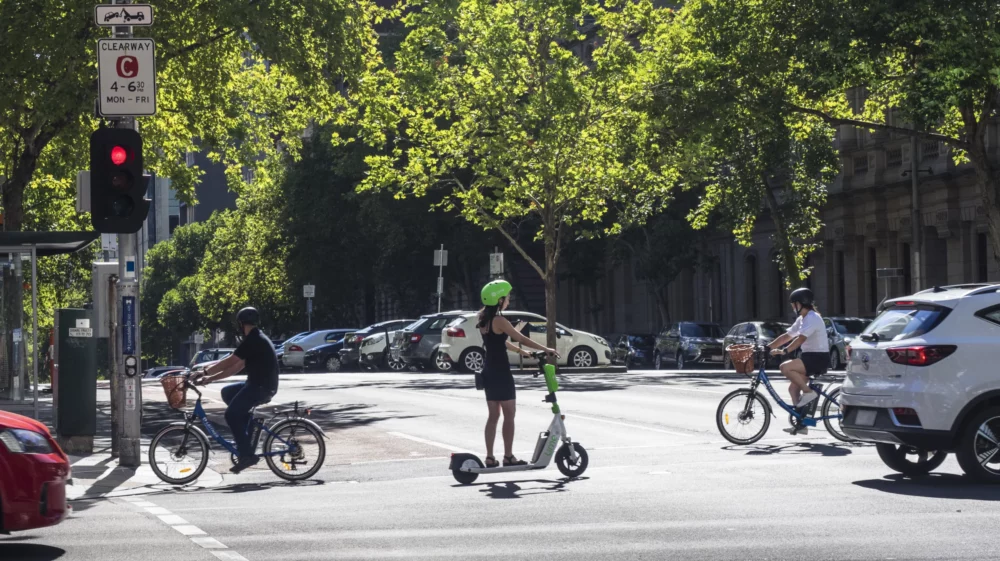
Feature / Even when transit is free, mobility carries hidden costs in time, safety, pollution and exposure to weather.
Feature / Sidewalks, crossings and street design reveal who moves with ease and who is pushed to the margins of the city.
Other publication / This report gives an overview of intergenerational justice, youth concerns, and mechanisms for youth participation across Europe.
Journal article / This study contributes to a deeper understanding of school food provision models in Europe.
Feature / This story explains and visualizes how urban heat islands form, why they matter and how they impact the most vulnerable people in our cities.
Journal article / This study analyses the climate implications of deep renovation and energy supply decarbonization in Estonia.
Project / TRANS4BIO analyses governance gaps linked to the energy transition and develops policy insights for integrated climate and biodiversity action.
Journal article / The journal article describes the development of the Whole School Food Approach framework and its implementation in 12 European countries.
Perspective / Andreas Hoy argues that a measure of the Paris Agreement's success will be the degree to which urban areas can become resilient to climate change.
Perspective / Heidi Tuhkanen examines adaptation trends in Europe – what has helped drive change and what needs to happen to break through longstanding bottlenecks.
Project / The SLOPE project supports ski organizations in assessing the impact of skiing on biodiversity and by integrating biodiversity management into winter sports.
Perspective / SEI calls for a just, human-centred transport transition as COP30 launches the UN Decade of Sustainable Transport.