SEI Tallinn’s Green and Circular Economic Transformation Unit deals with policy implementation related to sustainable consumption and production, including circular economy, sustainable waste management, and risk assessment.
Our aim is to improve resource management and decrease environmental impact in both public and private sectors through research and capacity building.
Through partner cooperation we develop a shared understanding of stakeholder needs and help identify tools and processes that enable knowledge transfer and increased competence of our partners related to environmental management.
Head of Unit, Senior Expert (Green and Circular Economic Transformations Unit)
SEI Tallinn
Assistant (Green and Circular Economic Transformation Unit) (on parental leave)
SEI Tallinn
The main focus is on sustainable and responsible procurement across public and private sectors as well as integrating sustainability principles into the management of environmental resources to assessing environmental, social, and economic impacts within an organization. This includes projects related to food systems, sustainable procurement and environmental management systems and tools
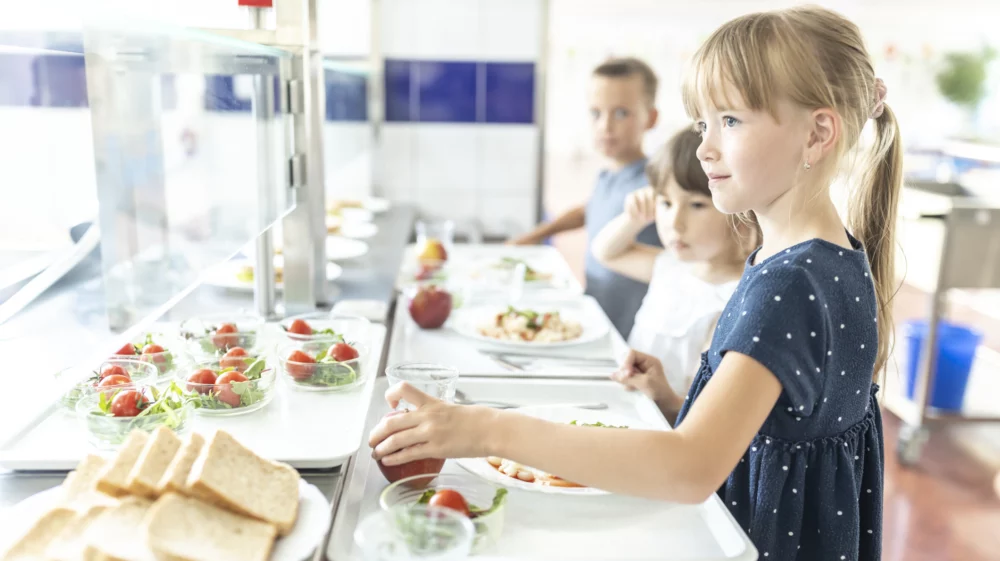
Project / This project aims to shift the paradigm of school food and school catering and to improve the regional, social and environmental resilience of the food system.
Project / The Climate Neutral Destinations (CliNeDest) project supports sustainable tourism by developing a toolkit for tourism business.
Project / StratKIT aims to develop the agenda of Green Public Procurements in the Baltic Sea region, circular economy and social cohesion.
Project / ChemClimCircle will address the linkage between chemicals, climate and circularity issues in public procurement.
Project / Green Key on turismiettevõtetele mõeldud rahvusvaheline ökomärgis.
Project / This project uses case studies to generate lessons learned and foster stronger Green Public Procurement policy in EU member states.
The main focus is on analysing waste management and circular economy-related policies and providing assistance in implementing policy instruments as well as exploring innovative circular business models and examining methods to design circular products and services.
Project / This project supports Bosnia and Herzegovina's progress towards EU accession by aligning waste management practices with the European Green Deal.
Project / SEI Tallinn advises the Tallinn Strategic Management Office on preparing the Tallinn Circular Economy Development Plan 2035.
Project / This project aims to develop circularity approaches that fit into the municipalities' framework for circular economy development.
Project / The Nairobi Circular Design Hub will help map and repurpose textile production waste among local designers and students.
Project / The aim of this textile circularity project is to enhance and expand the UPMADE business model.
Project / Teadusuuringu eesmärk on koostada kaardistus ja hinnang Eesti tarbijajärgse tekstiili ringlussevõtu võimekusest ja ning selgitada välja parimad lahendused.
Project / The project focuses on transforming public procurement by integrating climate protection, circular economy and chemical reduction principles.
Project / The main objective of the project is to implement a value-added upcycling strategy within the Kenyan garment and textile industry.
Project / Change(K)now! promotes a mindset change of municipalities, food delivery businesses, and residents to adopt circular solutions in food delivery systems.
Project / BALTIPLAST project supported the prevention and reduction of single-use plastics and plastic packaging in the Baltic Sea Region.
Project / Green Agenda supports Armenia, Moldova and Ukraine in their efforts to achieve climate neutrality through green transition.
Project / SEI Tallinn monitors riverine litter on the Pirita River in Tallinn from autumn 2024 until autumn 2026.
Project / Projekti eesmärk on välja töötada Eestis tekkivate tekstiilijäätmete ringlussevõtu lahendused, mis oleksid aluseks tekstiiliringlussevõtu süsteemi arendamiseks.
Project / Smart Circular Procurement (CircPro) promotes the transition to a more circular economy by increasing the implementation of circular procurements.
Project / Projekti eesmärk on propageerida ning edendada katkiste esemete parandamist ning kasutuskõlblike asjade korduskasutusse suunamist.
SEI brief / SEI Tallinn conducted the study of food waste loss in Estonia's food supply chain. About 167 000 tonnes of food waste are generated in Estonia each year.
Project / SEI assesses Georgia's waste and chemicals sectors, aiding MEPA's reforms and aligning with EU candidacy prerequisites.
The main focus is on risk related assessments across society, including vulnerability, and its multi-level governance. Current work deals with public sector actors and communities within the climate and disaster risk context.
Project / ClimaResponse aims to enhance the capacities of regional and local public authorities to efficiently plan and implement climate resilience strategies.
Project / Regions4Climate will implement innovative actions to enhance climate resilience within the real-life environments of partner regions.
Initiative / This initiative investigates how rapidly growing cities affect residents' wellbeing and how this interacts with the overall health of city systems.
Project / Community Safety Action for Supporting Climate Adaptation and Development (CASCADE) develops new tactics to prevent disasters and address climate risks.
505 results / 9 of 43 pages
SEI working paper / This working paper presents four scenarios and identifies viable options for decarbonizing the gas sector in Estonia, Latvia, Lithuania and Finland.
Project / SEI Tallinn advises the Tallinn Strategic Management Office on preparing the Tallinn Circular Economy Development Plan 2035.
Project / SEI Tallinn analyses the necessary measures in Estonia to reduce the vulnerability of people and businesses in transitioning to a climate-neutral economy.
Project / H2-SEAS project designs, builds and tests a novel, fully-integrated hydrogen-electric fishing vessel to accelerate a sustainable and accessible transition.
Feature / Water is a central research topic at SEI. This World Water Day, explore SEI's latest research and perspectives on water.
Tool / The SEI Urban Toolbox for Liveable Cities is a collection of SEI tools, methods and approaches that can be used widely for urban planning and development.
Feature / International School Meals Day provides an opportunity to reflect on the role of school food in tackling inequalities and promoting sustainable development.
Project / The UA-GRIDEX project aims to enhance Ukraine’s energy resilience in light of the military attacks targeting Ukraine’s energy infrastructure.
Feature / Explore key takeaways from a new study examining development finance flows in the Western Balkans.
Project / The aim of this textile circularity project is to enhance and expand the UPMADE business model.
Project / The BioFloat project tests the concept of floating islands in three lakes in Estonia and Latvia to preserve biodiversity and restore water ecosystems.
Project / The green reform indicators project proposes relevant indicators for Estonia to assess the state of its green transition.